
Why a Rivian R1T Owner Traded His Truck for Gas Ahead of Alaska Retirement Trips
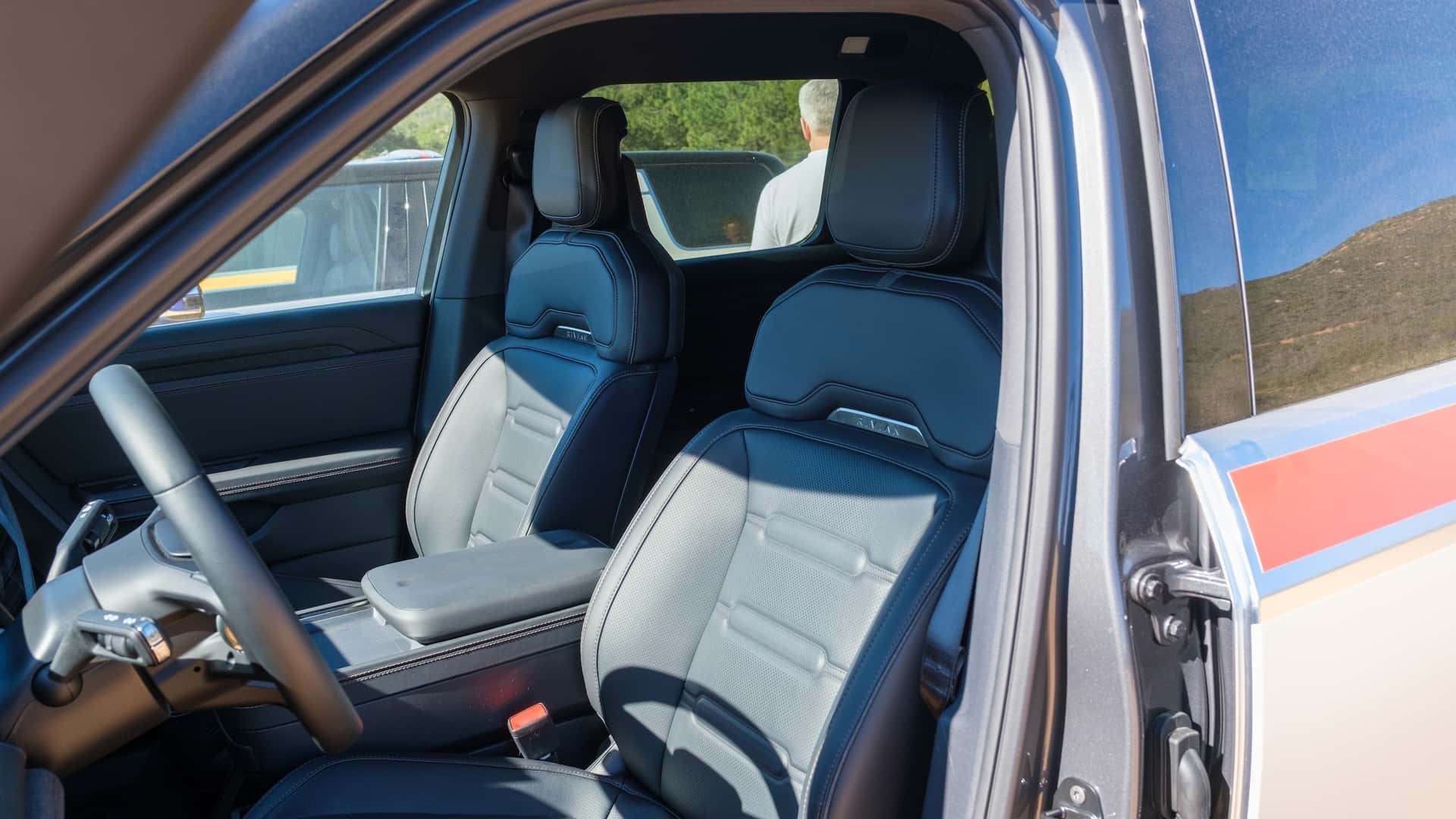
A Rivian R1T owner who genuinely loved towing his Airstream with the truck has sold it — not out of frustration with the vehicle itself, but because retirement travel to Alaska and Canada demanded a different kind of reliability.
Kevin, who posts on RivianForums as flybone89, put it plainly in a September 7 update: the R1T “works — it’s just not its best use case.” He traded his 2023 model for a gasoline pickup. He still praises the Rivian’s air suspension and towing stability, and he hasn’t ruled out coming back once the charging picture improves.
That nuance matters. This isn’t a tale of an EV failing its owner. It’s a story about how a vehicle can be a joy for years and then stop fitting the life you’re about to live.
The Range Math Behind the Decision
Back in July, Kevin reported getting 130 to 150 miles of towing range on familiar routes. He asked the forum whether a second-generation R1T might help on a planned run through South Dakota and Wyoming — a trip west along Interstate 90 through the Badlands, Black Hills, Devils Tower and Rock Springs, with four nights booked at Blue Bell Campground in Custer.
His driving days were already modest — three to four hours — precisely because he wanted time to enjoy the places he’d come to see. What he needed was confidence that the truck could get him between them.
The Towing Reality: 130–150 miles of range with an Airstream attached · roughly 5 extra hours one way on an Ohio-to-Florida run · an estimated 19+ hours of added time on the projected western loop
Those 19 hours are Kevin’s own projection, not a figure every R1T owner would reproduce. But the underlying question is real: how much of your day do you want to spend planning around where the truck can stop?
A Charger on the Map Isn’t Always a Charger You Can Use
Murdo, South Dakota, illustrates the problem neatly. A reliable stop there would break up the difficult stretch between Chamberlain and Wall. South Dakota’s state charging plan lists a Tesla location in Murdo and a RED E site at 602 5th Street.
But the PlugShare listing for the Pioneer Country Mart address was marked “Under Repair,” with repeated failed-charging reports from users. Tesla’s own Murdo page shows four Superchargers rated up to 120 kW — though Tesla notes that some sites are restricted to its own vehicles while others serve additional makes. A Rivian driver needs to know which kind he’s pulling into.
Then there’s the trailer itself. Unhitching, charging, re-hitching and pulling back out turns a quick stop into a small operation. Gas stations have their own awkwardness, of course — one reader described dropping a trailer just to reach a pump — but the fair comparison is how often that maneuver is required and what alternatives exist when it isn’t.
Campground Sockets Weren’t the Easy Answer Either
Overnight charging should be an electric tow vehicle’s trump card. Park, eat, sleep, wake up full. For a traveler moving in short stages, that changes everything.
Kevin ran into two problems. One campground banned EV charging outright. At another, the pedestal kept tripping until he dialed the current down so far that an overnight session wouldn’t restore enough range. KOA’s published policy backs this up: most of its pedestals were built for RV loads and aren’t suited to the continuous draw of EV charging, so guests are directed to locations with dedicated solutions.
Ironically, KOA lists its Badlands/White River site as charging-friendly — and Kevin knew it. His worry was reaching it, which he said posed much the same challenge as Wall. A welcoming outlet at the destination doesn’t help a truck that can’t comfortably arrive.
What Gasoline Actually Bought Him
Kevin said a Carvana offer let him exit the lease early with positive equity, and he expected gasoline to cost less than fast charging on the western trip. He didn’t share a full financial breakdown, so his total savings can’t be verified from the account — but the logic is easy to follow.
He also gained practical towing hardware: towing mirrors, backup assistance and trailer blind-spot monitoring on the new truck. What he lost was the Rivian’s everyday driving character, which he clearly misses.
- What he kept: the R1T’s stability and air suspension, which he still praises
- What he gained: towing-specific driver aids and no route planning around chargers
- What he gave up: the daily enjoyment of driving the Rivian
- What stayed open: a possible return once remote charging improves
The Counterpoint Is Just as Valid
Another retired owner in the same forum thread described running a 28-foot Airstream between Vancouver Island and Tucson. Sightseeing ate more time than charging did, and five extra hours over a long journey didn’t bother him at all.
That’s a legitimate reason to keep an R1T. If your stops line up with places you want to see, overnight charging is dependable, and the drive itself is a pleasure, the truck fits retirement beautifully. Travel Yukon’s official directory, for instance, lists charging locations at Watson Lake, Teslin, Haines Junction and Beaver Creek — the North isn’t a blank map.
And yet, a particular truck-and-trailer combination still needs reachable stops with workable fallbacks. Kevin’s choice doesn’t prove every retiree heading to Alaska should sell their EV. It does show that patience with a compromise has a limit, and that buyers are allowed to reach it.
Rivian and the charging networks would do well to read this as a roadmap. A dependable station in the right gap would answer more of Kevin’s concerns than another demonstration of pulling power.
Source: Torque News
Curious how this compares to other EVs? Try our comparison tool →What do you think?