
US Regulators Clear a Major Hurdle for Self-Driving Trucks
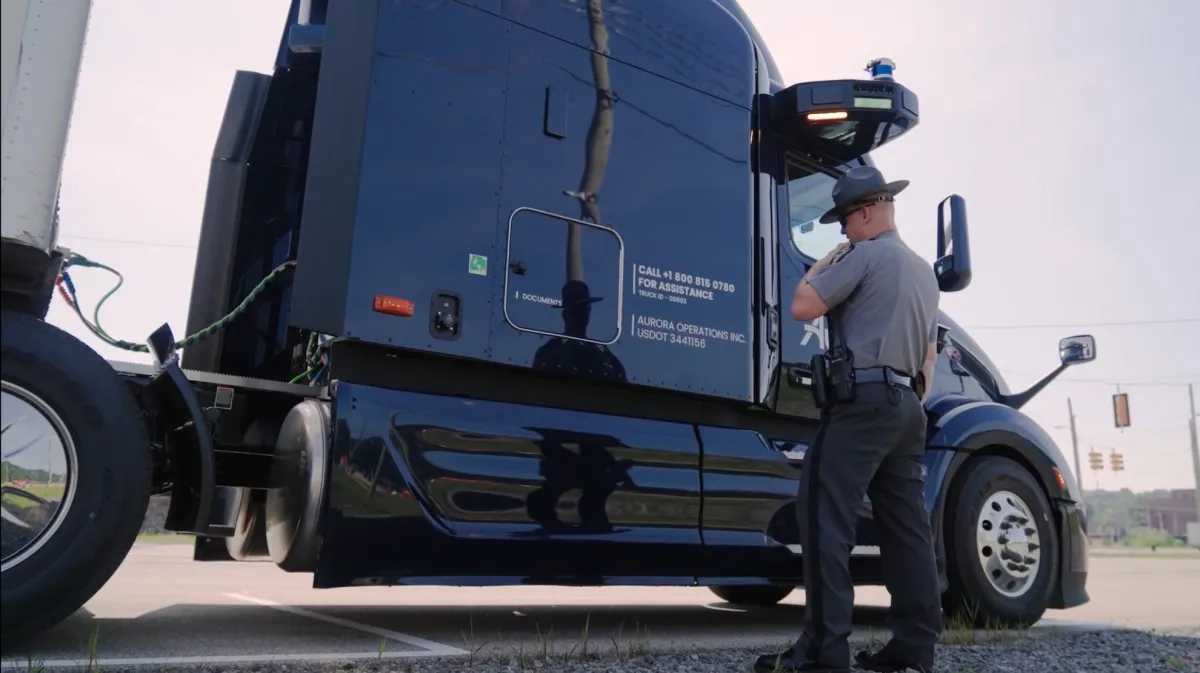
Self-driving truck developers Aurora Innovation and Kodiak AI have secured a federal exemption that removes one of the more stubborn obstacles standing between autonomous freight and full commercialization in the United States.
At issue was a long-standing safety rule. When a conventional semi breaks down, the driver is required to pull over, switch on the hazard lights and physically arrange reflective warning triangles on the roadway within ten minutes so other motorists are alerted. An autonomous truck that suffers a mechanical failure has nobody on board to carry out that task, which left operators exposed to a compliance problem no software patch could solve. Aurora pushed back hard, taking federal safety regulators to court and, after a rejected exemption request, escalating the matter to the District of Columbia Court of Appeals while relying on a temporary waiver in the meantime.
The Federal Motor Carrier Safety Administration has now resolved the dispute by granting a five-year exemption. Under the new arrangement, companies may swap roadside triangles for high-visibility warning beacons mounted on the cab itself, a setup Aurora demonstrates on its first responders page.
Industry figures have welcomed the decision. Daniel Goff, Kodiak AI’s vice president of external affairs, framed it as a step toward an autonomous era of freight movement on American roads, one he said can save lives and improve the efficiency of goods delivery. Gerardo Interiano, Aurora’s head of government relations and public affairs, said the ruling reflects official recognition of the economic and community benefits of autonomous trucking, describing the cab-mounted beacons as a modern solution that alerts other road users immediately without placing anyone in harm’s way.
The exemption is narrow in scope, but it answers a practical question that had been holding back deployment rather than a technical one. It also raises a broader question worth watching: whether these warning beacons could eventually become standard equipment across the trucking industry as a whole.
What do you think?