
Turning Railway Fiber Optics into a Real-Time Safety Sensor
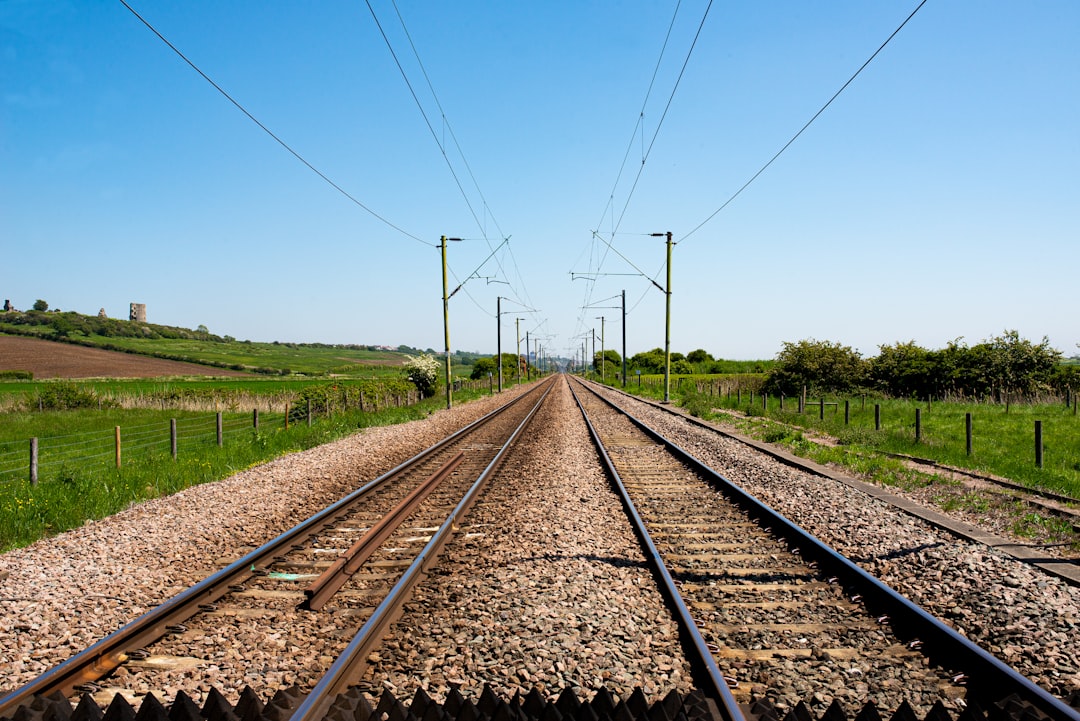
Monitoring the safety of an entire rail network is a massive challenge. Traditional methods like cameras or radar only cover specific points and can be affected by weather or power issues. Now, researchers in China have found a clever way to use the existing underground fiber optic cables—already installed for communication—as a distributed sensor to detect everything from faulty wheels to broken sound barriers.
The technique, called distributed acoustic sensing (DAS), sends pulses of light through the fiber and analyzes how vibrations along the cable affect the scattered light. By applying machine learning to this vibration data, the team from Southeast University and Nanjing University was able to identify different safety issues with remarkable accuracy. For example, their model detected train trajectories with 98.75% accuracy, and it could even tell a faulty wheel from a healthy one by looking at vibration frequencies—faulty wheels vibrate at higher frequencies than normal ones.
In their tests, the system successfully spotted damaged sound barriers (tested by simulating faults and striking them with a hammer) with 99.6% accuracy, and it could also flag unusual events like people climbing fences, rocks on the track, or nearby construction activity, achieving 97% accuracy after further training. The beauty of this approach is that no new infrastructure is needed—the fiber is already there, and monitoring stations can be connected at intervals along the track.
While the experiments were done in a controlled setting, the researchers are optimistic. They note that a single fiber can support multiple monitoring tasks simultaneously, which makes it a highly practical and cost-effective solution for railway safety. The next step is to validate the system under real high-speed train conditions.
What do you think?