
Toyota Packs a 1.5-Litre Hybrid Into Its Multi-Pathway Bet
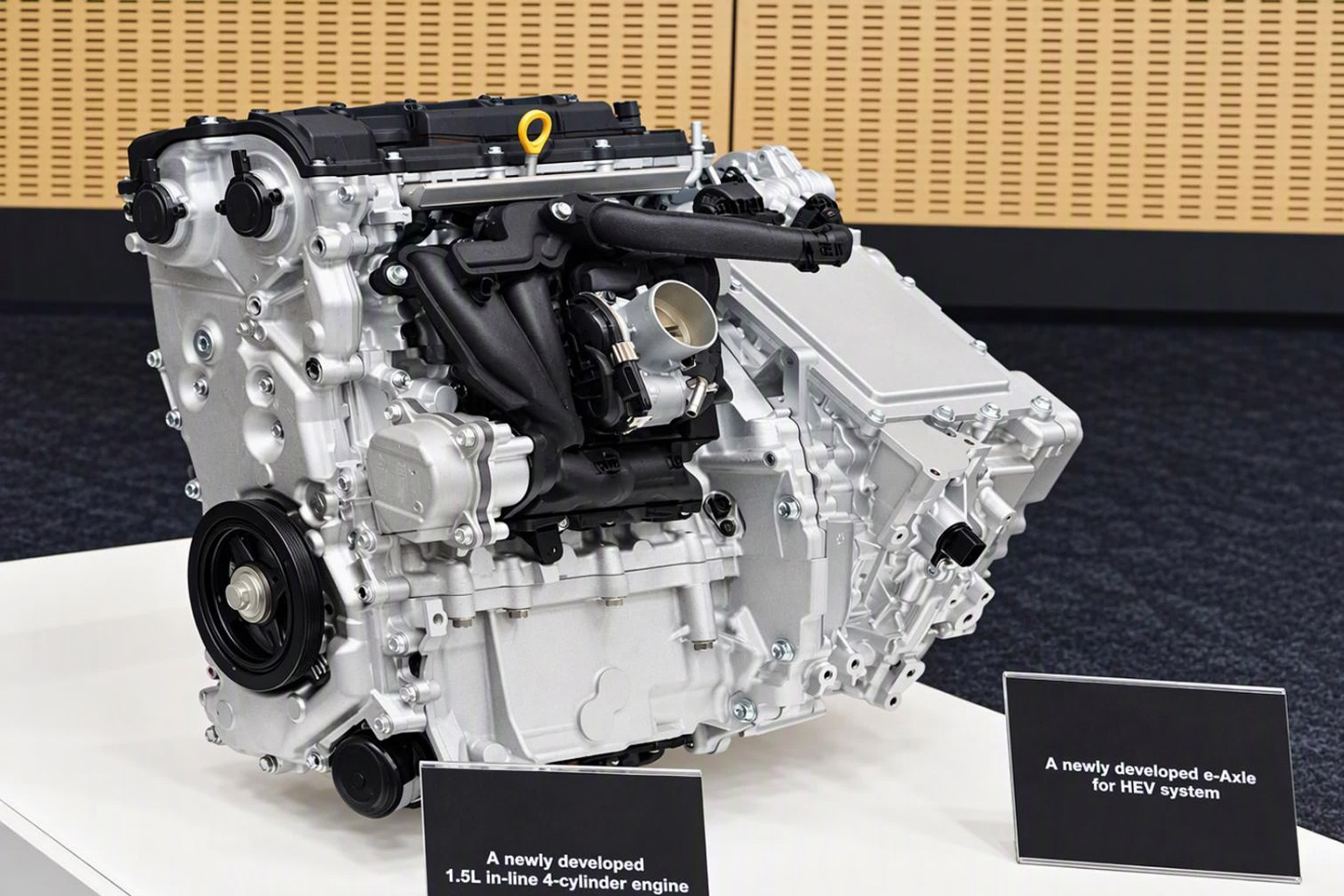
Toyota is reworking its hybrid hardware around a new 1.5-litre four-cylinder engine family, and the company claims the setup will deliver more than 15% better fuel economy than what it replaces. The powertrain is being engineered to slot into the same platform that will underpin battery-electric models.
The move is less about a single engine and more about flexibility. Toyota is designing the engine, power electronics and hybrid system as one integrated package, with electrification baked in from the first sketch rather than added later.
One Engine Family, Two Flavours
The new family will come in naturally aspirated and turbocharged forms, paired with lighter and smaller electric motors, inverters and power control units. That downsizing matters: the whole assembly is compact enough to fit a battery-electric-first architecture.
- Naturally aspirated unit: takes over hybrid duties currently split between a 1.8-litre engine and a three-cylinder 1.5-litre
- Turbocharged version: offered alongside for higher-output applications
- Packaging: lower profile, allowing lower bonnet lines and freer vehicle proportions
Where does the 15% come from? Toyota points to reduced mechanical friction, lower electrical losses and less aerodynamic drag, plus improved thermal management. No single silver bullet — just a stack of small gains.
Key Specs: 1.5-litre four-cylinder engine family · >15% fuel economy gain target · naturally aspirated and turbocharged versions · shared hybrid and BEV platform
Why the Platform Matters More Than the Engine
The headline number is the efficiency gain, but the real story is the architecture. Toyota says the platform will accept hybrid and plug-in hybrid drivetrains without altering silhouette, cabin space or capability — and without compromising full battery-electric performance.
That means one shared architecture spreads development and production spending across larger combined volumes. Plants can then shift the powertrain mix as buyer demand moves, rather than running dedicated lines for each type.
It is a hedge, and a deliberate one. Toyota has argued for years that energy conditions and customer needs differ market to market, so a single solution will not fit everywhere.
Beyond Toyota’s Own Badge
Two details round out the plan. Toyota intends to sell more of its engine and hybrid technology to third parties, which turns the powertrain into a revenue line as well as an internal component. The system is also being engineered to accept renewable and carbon-neutral fuels.
Neither detail comes with a timeline or volume target yet. Toyota has not said which models get the new hybrid first, nor how much of the 15% gain will survive real-world driving. Those answers will decide whether this is clever engineering or just clever positioning.
Photo: Toyota / Automotive World · Official Press Kit / Editorial (Editorial / Press Kit)
Source: Automotive World
Curious how this compares to other EVs? Try our comparison tool →What do you think?