
Tesla's China Playbook Flips: Domestic Sales Slide 12% as Exports Double
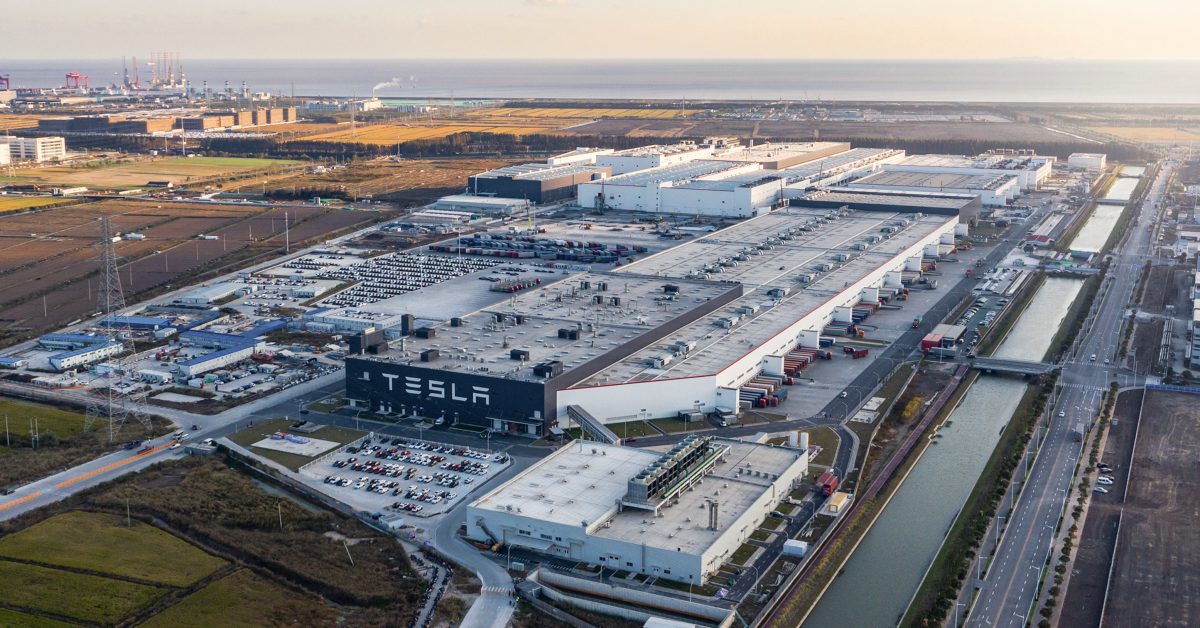
Tesla’s factory in Shanghai is increasingly looking like an export hub rather than a domestic sales machine. Through the first nine months of 2026, the automaker delivered 381,088 vehicles to buyers inside China — an 11.9% drop from the same stretch last year, based on data from the China Passenger Car Association. Meanwhile, Giga Shanghai’s shipments abroad more than doubled to 361,972 units.
That means nearly half of everything Tesla now builds in China is leaving the country. It’s a striking reversal from the vision Elon Musk laid out when the plant broke ground in January 2019, when he said Shanghai would produce affordable versions of the Model 3 and Model Y for Greater China while higher-cost variants stayed in the US. Within about eighteen months, that promise had already eroded: by late 2020, Shanghai was supplying right-hand-drive Model 3s to Australia and New Zealand and shipping cars to Europe. Today its reach spans Europe, Asia-Pacific and — under Ottawa’s new China EV import quota — Canada once again.
The domestic figures are hard to ignore. Tesla’s first nine months in China were its weakest in at least four years, and down 17% from the 460,203 vehicles it sold there in the same period of 2024. The third quarter was rougher still, with Chinese retail sales falling 16% to 142,133 units and July alone dropping 33%. September’s 64,837 deliveries, down 9.4%, were the quarter’s high point. Some of this reflects a broader market contraction — NEV retail sales across China are down 12.8% through September after Beijing halved its purchase tax exemption on January 1 — so Tesla is roughly pacing the market year-to-date. But in Q3, when the market slipped about 10%, Tesla fell 16%.
Wholesale figures, which combine domestic sales and exports, tell a different story: they’re up 22.5% this year, and July’s 93,579 units was the factory’s best July on record. That growth is entirely export-driven. Tesla has already shipped more cars out of China in 2026 than it managed in all of 2023, 2024 or 2025. Shanghai’s Q3 wholesale volume of 275,111 vehicles represented 57% of Tesla’s 486,532 global deliveries — with Chinese buyers accounting for just 29% of that total.
Beijing is now preparing to tighten the economics of that export strategy. On Monday, the Ministry of Finance and State Taxation Administration announced that the VAT export rebate on new energy vehicles will fall from 13% to 9% starting April 1, 2027, covering both battery-electric and plug-in hybrid cars, with the rate determined by the customs declaration date. The move follows a broader pattern: China eliminated the solar panel export rebate in April, and battery rebates were trimmed from 9% to 6% with a full phase-out set for January 1, 2027. Automakers will effectively absorb an additional 4% of export value on every EV shipped abroad. Industry estimates suggest this could cost Tesla roughly $600 million annually at current export volumes — a figure Tesla has not confirmed. With the deadline tied to customs dates, expect a rush of exports through Q4 and Q1, flattering wholesale numbers before the cost bite lands in Q2 2027. The open question for Shanghai is what happens when both its home market and its export valve shrink simultaneously.
What do you think?