
Survivor or Spare Parts? A 1955 Jaguar Saloon Seeks a New Fate in Missouri
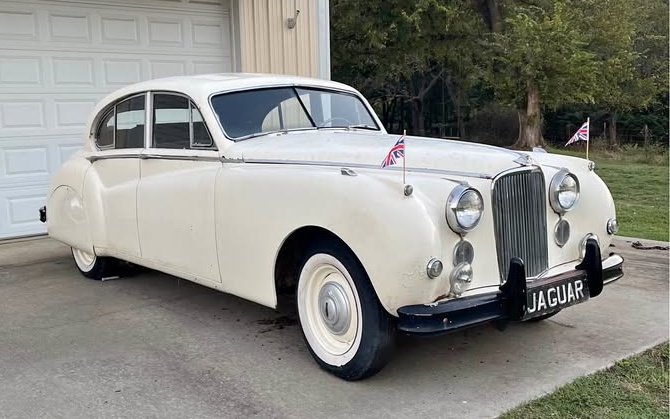
Every so often a classified listing forces enthusiasts to pick a side: rescue it or strip it. That is exactly the dilemma facing anyone who scrolls past this 1955 Jaguar Saloon, currently offered in Neosho, Missouri, for $2,500. At a glance, the car hardly looks like a donor candidate. Its bodywork presents clean, well-aligned panels, and the white paint still carries the dignified presence that made these big British four-doors such a statement piece in the mid-1950s.
The seller’s own description, however, cuts the romance short with two blunt words: “has rust.” A photo taken inside the left rear door hints at corrosion that likely extends well beyond what the camera captured, and the floors show heavy deterioration. Door cards are worn, while the seats appear serviceable enough to clean up for a driver-quality car. No image covers the full dashboard, so the interior’s true condition remains an open question.
Mechanically, the picture is just as ambiguous. The engine does not run, and no explanation is offered as to why. For a vintage Jaguar, that silence matters, because the XK-derived inline-six under the hood is often worth more on its own than the asking price of the whole car. It is also unclear whether the engine still turns freely. For buyers weighing a restoration, drivetrain condition and chassis integrity are the two unknowns that will decide whether this is a project or a parts pile.
The seller seems to have already drawn a conclusion, floating the idea of repurposing the sedan as an advertising piece instead. Parked outside a business with signage along its flanks, a stately old Jaguar would certainly draw eyes. Others in the enthusiast community have gone further, suggesting a modern swap: transplanting an electric drivetrain and battery pack from a wrecked EV, a route that would transform a rusty British saloon into something genuinely unusual.
So which path makes sense? Parting it out could keep other Jaguars of the era on the road, which has real value for a model with a limited survival rate. Yet the straight sheet metal and largely complete trim argue that this car has not yet crossed the point of no return. Reviving it would demand time, skill and a serious budget, but the result would be a rare sight on any road today. In a market where barn-find Jaguars rarely appear this cheap, the decision may ultimately come down to how much rust truly hides beneath the sills, and how much heart the next owner brings to the job.
What do you think?