
Stellantis and Wayve Expand AI Driving Tests to Fiat and Maserati Models
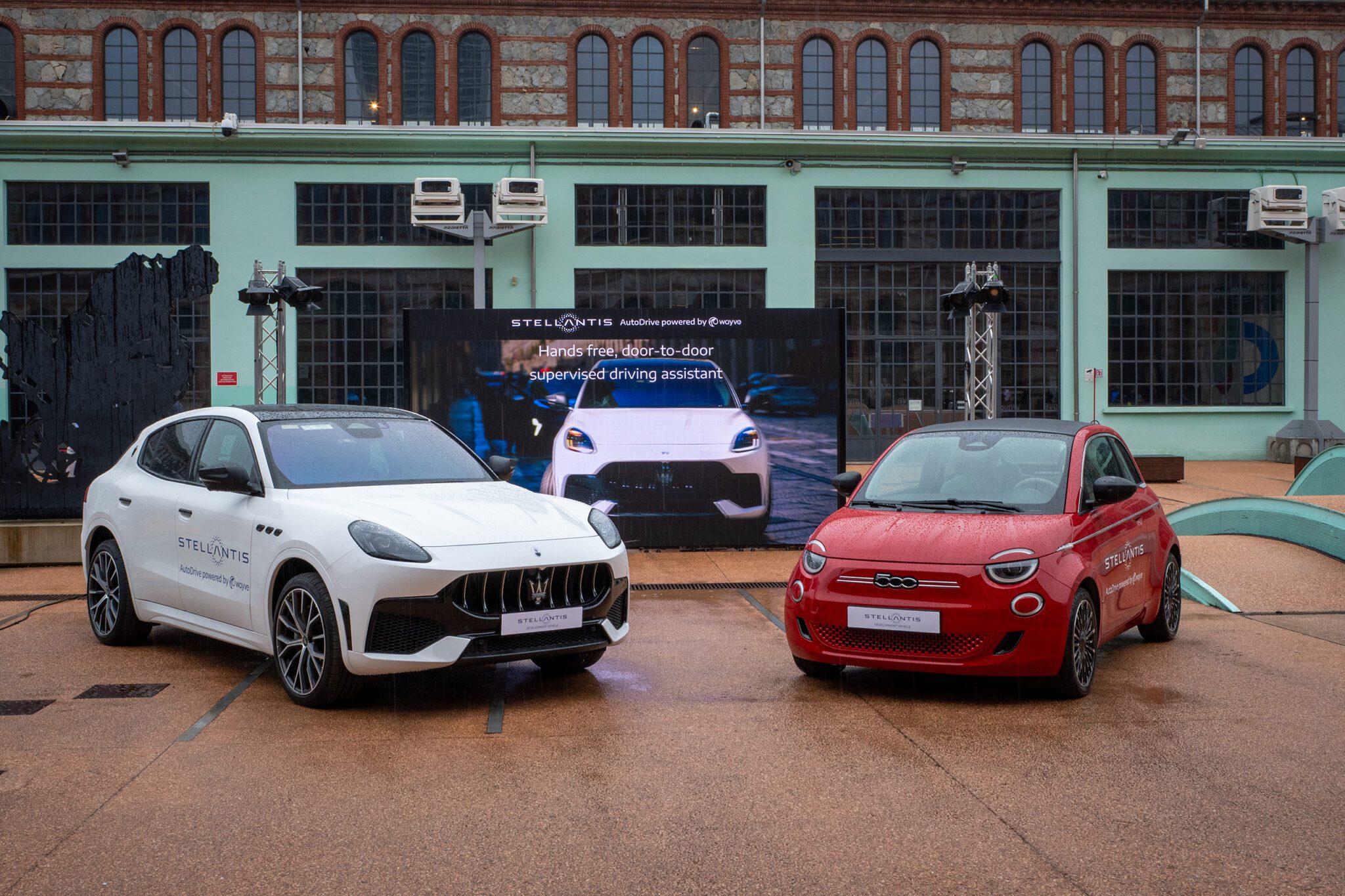
Stellantis and Wayve have hit a new milestone in their partnership, successfully demonstrating supervised hands-free driving on two very different vehicles: the Fiat 500e and the Maserati Grecale. The tests, conducted on development versions, highlight a central claim from the two companies: that a single artificial intelligence driving model can be adapted across a wide range of vehicle types, from small city cars to premium SUVs. According to the companies, the integration for both vehicles progressed from initial setup to on-road testing in just under four weeks, a compressed timeline that speaks to the flexibility of the software.
The system, classified as Level 2++, combines Wayve’s AI Driver with Stellantis’ STLA AutoDrive platform. It is scheduled to make its market debut in North America in 2028. The demonstration took place at the Wave by Vento event in Turin, Italy. These two vehicles follow an earlier integration into a Jeep Grand Cherokee, which was completed earlier in 2026, shortly after the two firms announced their collaboration in May. By testing a compact electric hatchback and a high-performance luxury SUV, Stellantis and Wayve are putting their core hypothesis to the test: whether one AI model can handle the distinct geometries, driving dynamics, and sensor configurations across different brands without requiring bespoke software for each.
Wayve’s technology is built on an end-to-end learning approach, meaning it learns from real-world driving data rather than relying on highly detailed HD maps, hand-coded rules, or custom hardware. This architecture is designed to be scalable and adaptable. Alex Kendall, co-founder and CEO of Wayve, emphasized the broader vision, stating that they are creating a general-purpose AI Driver capable of powering any vehicle anywhere. He noted that after first integrating their technology into a Jeep Grand Cherokee, they have now brought the same core intelligence to the Fiat 500e and Maserati Grecale—three very different vehicles with distinct configurations. Kendall added that this progress demonstrates how embodied AI can become a foundation for automakers to deliver safe, intelligent, and enjoyable driving experiences at a global scale.
Looking ahead, the two partners intend to use this same foundational technology to support future Level 4 driverless services. These would be deployed on Stellantis’ L4-Ready Platforms, with each application being validated separately to ensure safety and reliability. While the current demonstration remains at a supervised Level 2++ stage—requiring a human driver to remain attentive—the move toward higher automation levels suggests a long-term strategy where Stellantis can offer increasingly advanced autonomous features across its diverse brand portfolio, from economical Fiats to luxury Maseratis.
What do you think?