
Paris Motor Show 2026: Chinese Brands Double Their Presence, But Not All Plan to Stay
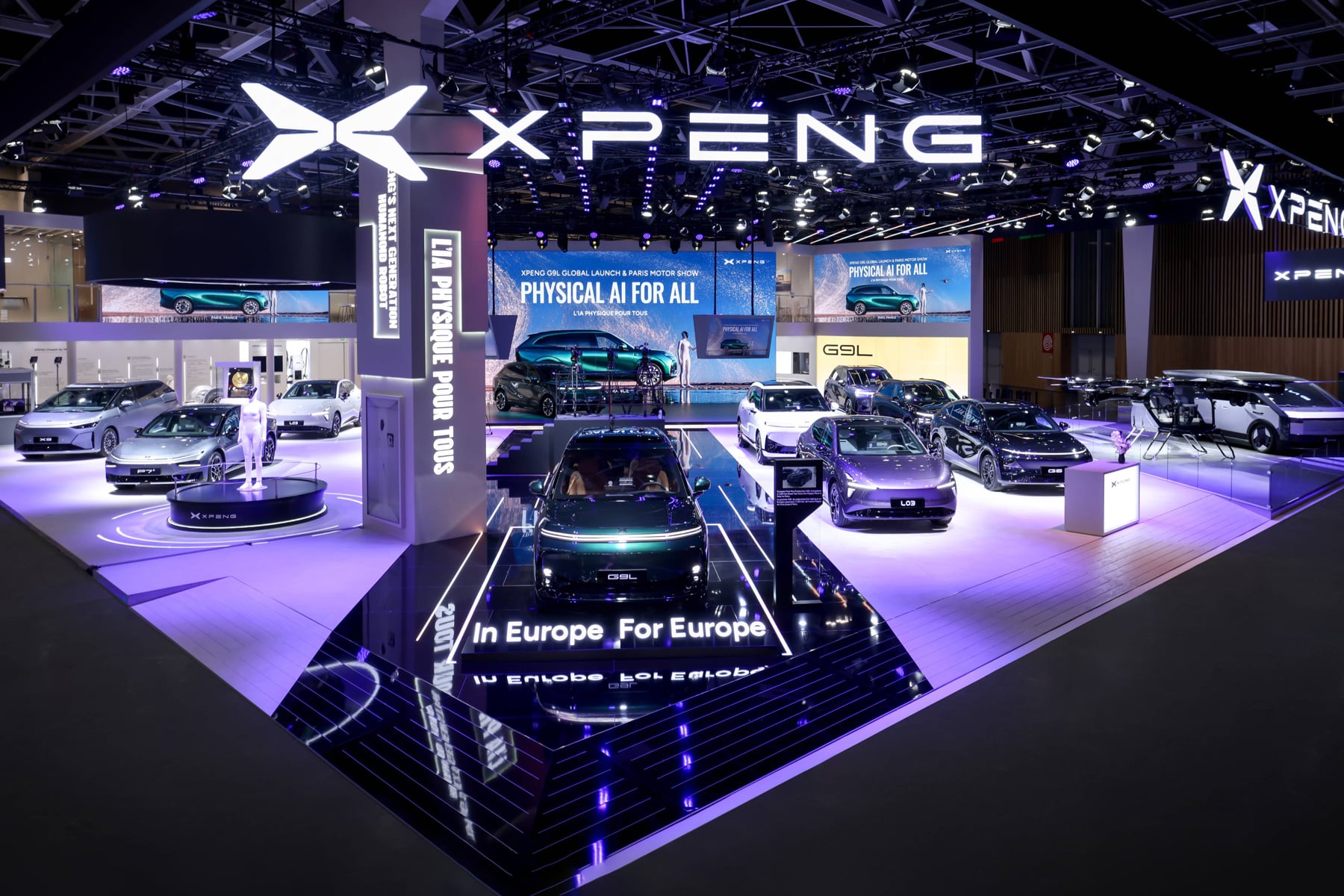
The 2026 Paris Motor Show has turned into an unexpected barometer of China’s ambitions in Europe. Where ten Chinese exhibitors lined up two years ago, this year’s edition hosts twenty — a doubling that says as much about momentum as it does about the crowded nature of the market. Our walk through the halls revealed a field split between manufacturers digging in for the long haul and those merely testing the waters with little enthusiasm.
Three brands clearly belong to the first camp. Xpeng appeared with the compact L03, a model engineered specifically for European buyers, alongside its larger performance offerings. Its emphasis on driver-assistance software tuned for European roads — and the fact that several of its vehicles roll out of Magna’s Graz facility — signals a commitment that goes beyond a single trade fair appearance. BYD followed a similar playbook with a fleet of small and compact cars, though the enormous Shark pickup on display, stretching beyond 5.5 metres, quietly reminds visitors that the company has emerging markets firmly in its sights too. Leapmotor rounded out the group, sharing floor space with Stellantis and leaning on compact models suited to European streets.
Contrast that with the newcomers. Li Auto and Changan brought range-extender vehicles that illustrate how far China has moved past a purely battery-electric strategy. A brief drive in Li Auto’s Li L6 proved surprisingly refined, with its 50 kWh battery capable of pure-electric running until the combustion engine is summoned — at which point vibrations intrude on an otherwise polished experience. Changan, meanwhile, leans on a 140-year corporate narrative (though its present form dates to 1996) and design work from former VW chief designer Klaus Zyciora, whose Deepal S07 impressed with its quiet cabin and strong software. Whether range extenders make sense in an era of 800-volt architecture and sub-15-minute charging is a fair question; whether Europe needs another oversized electric SUV is another.
Not everyone showed up, and not everyone who did seemed serious. MG, a genuine European success story, stayed away entirely. Great Wall Motor last appeared in 2022, and Hongqi’s grand 2024 entrance has since faded. GAC was present but has yet to deliver on a German market launch announced back in 2024. The Jaecoo SUVs, nicknamed “Temu Range Rovers” in the UK for their resemblance to Land Rover products, crystallise the split within China’s auto industry: one camp, led by BYD and Xpeng, pushes technical innovation globally; another, including Chery and Hongqi, leans on imitation.
The show also drew a noticeable number of African delegations inspecting Chinese models — a reminder that Europe is not the only prize. With fierce competition among Chinese manufacturers themselves, and none yet having survived a full decade in Europe, a shakeout looks inevitable. Most will struggle and many will withdraw, but a handful will remain. That persistence, combined with Europe’s decades of brand heritage and loyal customers, is likely to define the continent’s competitive landscape for years to come.
What do you think?