
Infineon Bets €1.1 Billion on Gallium Nitride Chips at Villach Plant
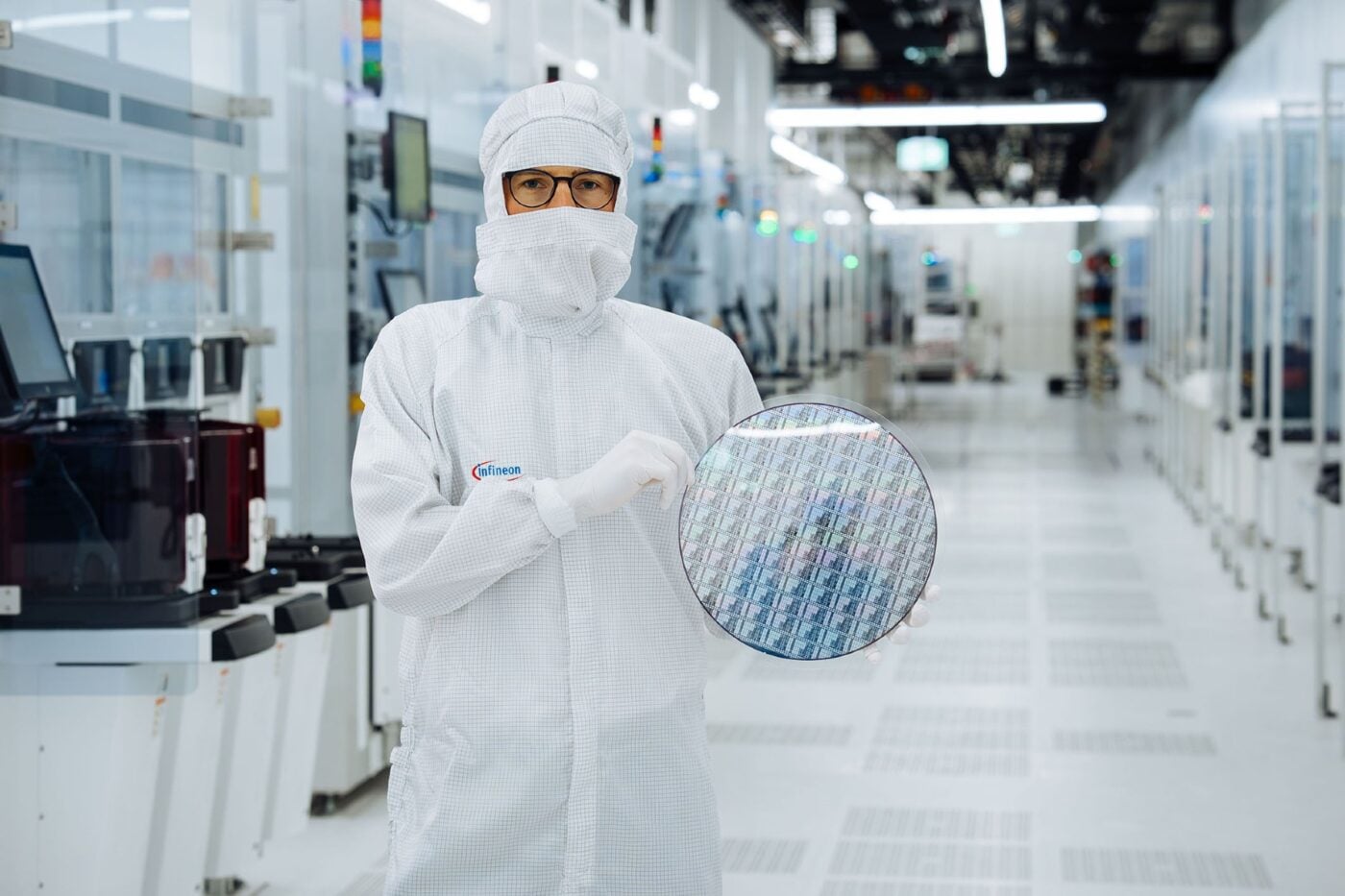
Infineon is putting serious money behind a technology it thinks will reshape power electronics. The German chipmaker will channel roughly €1.1 billion into its Villach site in Austria by 2034, with volume production of gallium nitride power semiconductors on 300-millimetre wafers set to begin at the end of 2027.
The headline here is scale. Infineon claims it will be the first company anywhere to run GaN power electronics on 300-mm wafers in high-volume manufacturing — a jump up from the 200-mm format the industry has relied on until now.
Key Specs: ~€1.1 billion investment through 2034 · 300-mm GaN wafers · Production start late 2027 · €319 million EU state aid approved
Why 300-mm wafers matter
Moving to the larger wafer size is the whole ballgame. Infineon says the shift from 200 to 300 millimetres lifted production capacity per wafer considerably, which is what makes industrial-scale GaN manufacturing economically viable in the first place.
Gallium nitride itself is the draw. Compared with plain silicon, GaN switches and converts electricity with far lower losses and less waste heat, which allows engineers to build smaller, punchier systems. That matters for a long list of applications Infineon is targeting: AI data centres, electric vehicles, renewables, robotics and consumer electronics.
The commercial picture looks promising. Analysts cited by the company expect GaN power semiconductors to grow at roughly 35% per year between 2025 and 2031, taking the segment to about US$3.5 billion.
Reusing what’s already there
The Villach expansion leans on existing cleanroom space rather than a greenfield build, which keeps costs down and speeds things up. Infineon Austria employs around 5,800 people, with some 4,800 of them based at the plant.
CEO Jochen Hanebeck framed the move as a statement about Europe’s position in semiconductors, saying the investment underlines a commitment to the continent’s chip ecosystem and its technological independence.
Brussels has already signed off on €319 million in state aid under the European Chips Act, with formal approval from Austria’s economy ministry expected to follow on schedule.
Austrian Chancellor Christian Stocker called it one of the largest single investments in the country’s high-tech history — and a signal that semiconductor manufacturing need not be concentrated solely in Asia or the United States.
Economy Minister Wolfgang Hattmannsdorfer pointed to the spillover effects, noting that each chip industry job statistically supports six more elsewhere in the economy. Sabine Herlitschka, who heads Infineon Technologies Austria, stressed the link between research and factory floors: competitiveness, she argued, comes from turning good science into industrial output.
For drivers, the near-term impact is indirect but real. More efficient power semiconductors are a building block for faster charging, lighter onboard electronics and better energy management in EVs — and Infineon is betting that demand will be there when the lines start running in 2027.
Source: electrive.com
Curious how this compares to other EVs? Try our comparison tool →What do you think?