
IEEE Award-Winning Researcher Sets His Sights on Retiring the Traffic Light
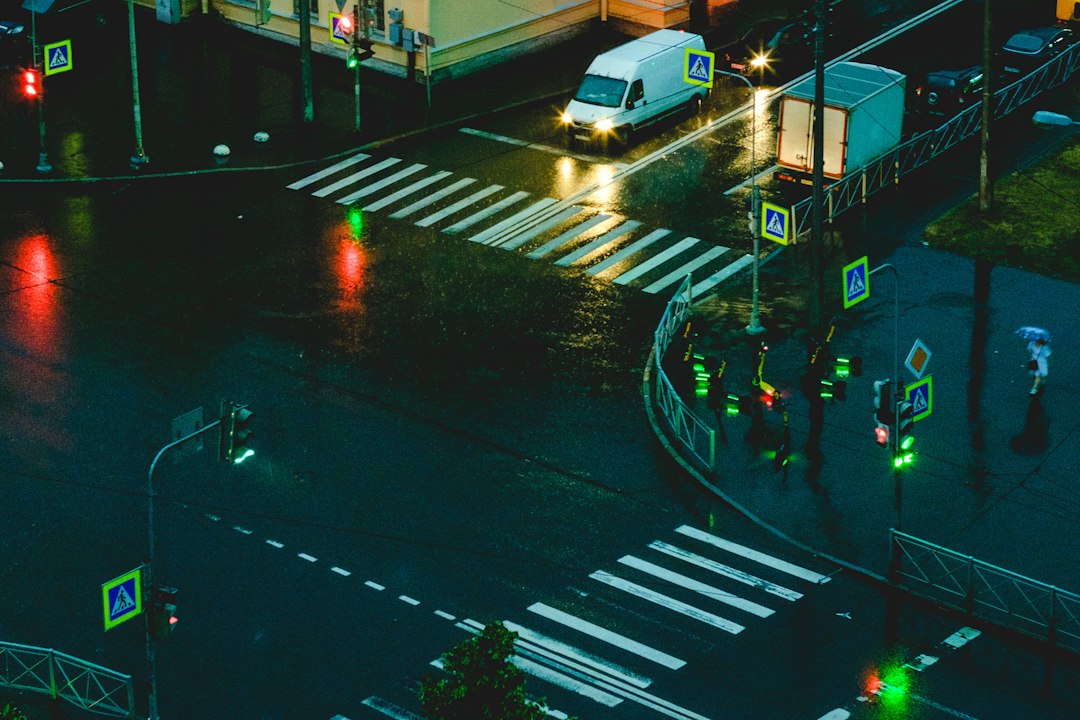
Christos Cassandras, an IEEE Life Fellow based at Boston University, has spent years building the mathematical foundations that could eventually make traffic signals obsolete. His work has now earned him the 2026 Outstanding Research Award from the IEEE Intelligent Transportation Systems Society, recognizing a career devoted to proving, through rigorous analysis, that connected and automated vehicles can negotiate intersections far more safely than human drivers relying on colored lights.
The idea behind his research is a departure from the incremental upgrades that dominate today’s smart-mobility projects. Rather than optimizing signal timing or adding sensors to existing intersections, Cassandras and his collaborators explore what happens when vehicles coordinate directly with one another, using formal methods to show that such systems meet safety guarantees before a single car hits the road.
That mathematical grounding matters because the stakes are high. A traffic-light-free intersection only works if every vehicle’s movements can be verified in advance, and Cassandras’s career has centered on developing the proofs and control frameworks that make those guarantees possible. His award reflects a growing recognition that autonomous transportation will advance not just through hardware, but through the kind of verifiable theory his group produces.
His selection also underscores how the intelligent transportation field is maturing. Cassandras, who has published extensively on discrete event systems and optimization, represents a strand of research that treats vehicle safety as a problem to be solved on paper before it is solved in traffic.
Photo: Red Shuheart on Unsplash (Unsplash License)
What do you think?