
Hyundai Ioniq 6 As A Used EV: What 30 Months Of Ownership Actually Reveals
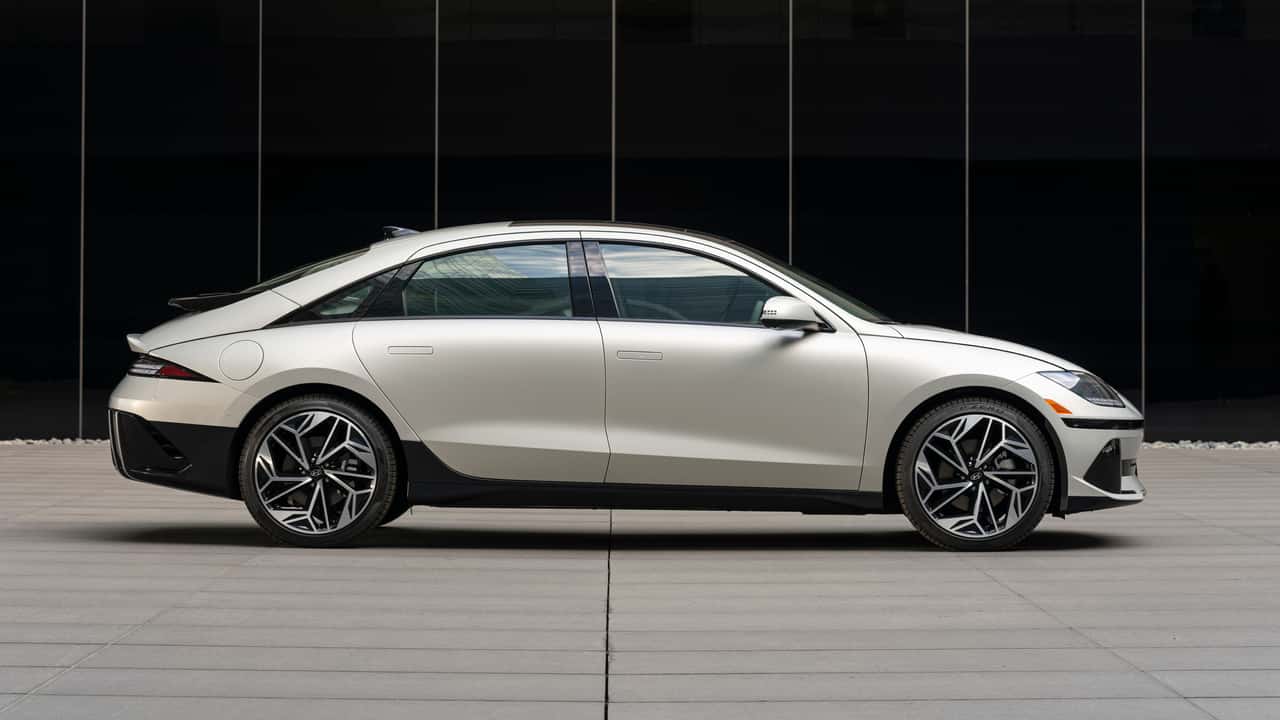
The Hyundai Ioniq 6 is gone from U.S. showrooms, shelved for the 2026 model year after sales never matched its smaller crossover sibling. That’s exactly why used examples are now worth a serious look — and one long-term owner’s two-and-a-half-year report card makes the case stronger than any spec sheet.
On paper, few EVs of its era were this efficient. The Ioniq 6 carried an EPA rating of up to 361 miles and returned roughly 4.2 miles per kWh, figures that beat the Ioniq 5 and every Tesla built to date. The slick sedan silhouette was the reason — and also the reason American buyers largely ignored it.
The Price Side Is Easy
A quick scan of the used market turns up plenty of Ioniq 6 sedans hovering around $21,000. Many are SEL-trim cars on 18-inch wheels, which is precisely the configuration that unlocks the full 361-mile range rating and the model’s quickest charging behavior.
Key Specs: Up to 361 mi EPA range · ~4.2 mi/kWh efficiency · 800-volt architecture · 10–80% in 18 minutes on a 800V+ charger
So the value question answers itself. The reliability question is the one that matters, and YouTuber The Ioniq Guy — who has lived with an Ioniq 6 for 30 months — says the answer is a fairly relaxed “yes.”
What Actually Broke
Almost nothing. His power charge door once refused to open or close, then fixed itself. No tires replaced. No 12-volt battery swap. No ICCU drama. That last point is notable, since the Integrated Charging Control Unit became a known weak spot across early Hyundai EVs and triggered plenty of forum anxiety.
Two Northeastern winters on the original 12-volt battery is genuinely impressive, given how poorly some early Hyundai EVs managed that component. The low odometer helps — the car has covered just 8,800 miles — but the record is still clean.
On the ICCU, the owner simply isn’t worried. Hyundai has stretched the warranty on the part to 15 years or 180,000 miles, and he doesn’t intend to keep the car anywhere near that long.
Where The Ownership Experience Shows Its Age
What he is ready to move on from is the software. The Ioniq 6 runs two generations behind Hyundai’s current interface.
- No manual battery preconditioning — a real annoyance in cold weather
- Basic feature set compared with newer Hyundai EVs
- Route planning that favors Tesla Superchargers — a problem for an 800-volt car
That routing bias cuts against the car’s biggest strength. Plugged into a Supercharger, the Ioniq 6 must step 400 volts up to its native 800, dragging charge rate below 100 kW. On Electrify America or EVGo hardware rated at 800 or 1,000 volts, it pulls more than 200 kW and completes 10–80% in 18 minutes — adding 253 miles of rated range in under 20.
Who Should Actually Buy One
If you’re comfortable planning your own charging stops and can live without SUV cargo room, the Ioniq 6 quietly delivers more road-trip range per dollar than almost anything else at its price. Sedan shoppers are a shrinking crowd, which is part of why it died here — and part of why it’s a bargain now. A discontinued badge is only a liability when parts and support dry up. Hyundai’s warranty coverage, at least on the ICCU, suggests that day is far off.
Source: InsideEVs
Curious how this compares to other EVs? Try our comparison tool →What do you think?