
How Toyota's RAV4 Became the Blueprint for Two Electric Eras
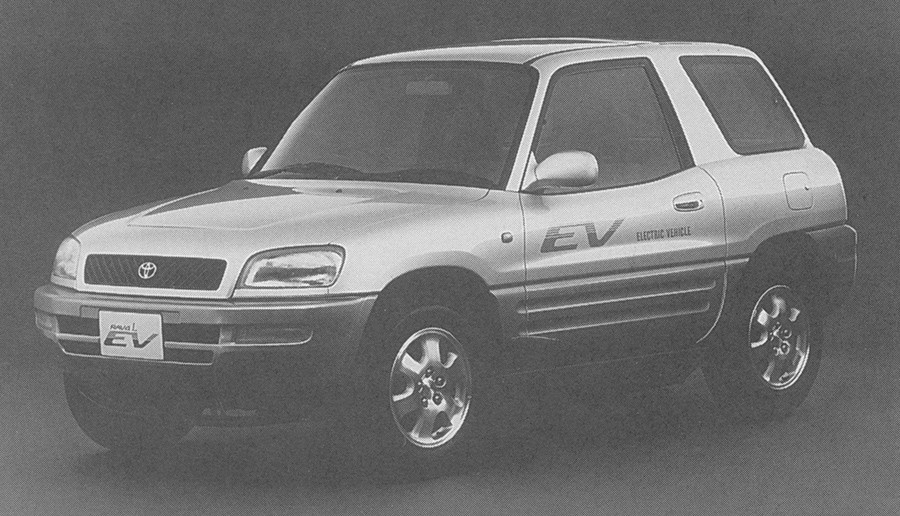
Long before electrification became a boardroom buzzword, Toyota turned an ordinary compact crossover into a rolling laboratory. When Hiroshi Okuda took over the company’s presidency in 1995, he pushed the automaker to move its environmental vehicle work out of the research lab and onto real roads, largely in response to California’s looming zero-emission rules and growing concerns about oil dependence. The engineering muscle behind that push came from Toyota’s Electric Vehicle Development Division, formed in 1992, with advanced power research guided by Dr. Hiroyuki Watanabe, who joined the board in 1996 to steer hybrid, electric, and fuel cell architectures.
Rather than design a clean-sheet chassis, the team leaned on the first-generation RAV4 as a common technical base and split its efforts down two propulsion paths. The battery-electric branch started with two candidate chemistries: sealed lead-acid packs and a newer nickel-metal hydride design co-developed with Panasonic. Focus groups in Japan and the United States made the verdict clear — lead-acid simply could not deliver usable range. The production RAV4 EV arrived in Japan in September 1996 and reached the US in 1997, offered in three- and five-door body styles. The five-door packed a 50 kW permanent magnet AC synchronous motor good for 190 Nm, an electronically limited 77 mph top speed, and more than 124 miles of range on Japanese test cycles. To keep the cabin usable, engineers tucked the battery bank beneath the passenger floorboards and added a 200V onboard charger that could refill a drained pack in ten hours, plus a heat pump air conditioning system, low rolling resistance tires, and regenerative braking. Real-world data came from fleet programs, including a five-year rental scheme launched in 1997 on the island of Jersey with five three-door models. Global sales and leases between 1996 and 2003 totaled roughly 1,900 units, about 1,500 of them in the US, with 320 sold in California in 1998 to satisfy state regulations.
The second path explored hydrogen. In October 1996, Toyota showed the FCEV-1 prototype in Osaka, the first fuel cell electric vehicle fitted with a metal hydride storage tank. Its 20 kW Toyota FC Stack, a polymer electrolyte design, exceeded 60 percent energy conversion efficiency while emitting only water vapor. Storing hydrogen in a metal alloy allowed lower pressures than compressed gas, though it pushed curb weight to 1,820 kg; testing produced a 62 mph top speed and 155 miles of range. A year later came the FCEV-2, which added an onboard methanol reformer to pull hydrogen straight from liquid fuel — a workaround for the near-total absence of hydrogen refueling infrastructure at the time.
The lessons from these programs did not stay contained. By 2001, battery management and power control software refined across the RAV4 EV and Prius efforts fed into the next-generation FCHV-3 and FCHV-4 fuel cell prototypes. Those later vehicles moved to the larger Highlander platform and switched to high-pressure gaseous hydrogen tanks, and the FCHV-4 became the first fuel cell vehicle licensed for public road testing in Japan. That groundwork led to the limited commercial release of the Toyota FCHV in Japan and the United States in December 2002 — a reminder that today’s electric and hydrogen strategies rest on experiments that began three decades ago.
What do you think?