
Highway Trials Expose Blind Spots in Vehicle-to-Everything Communication
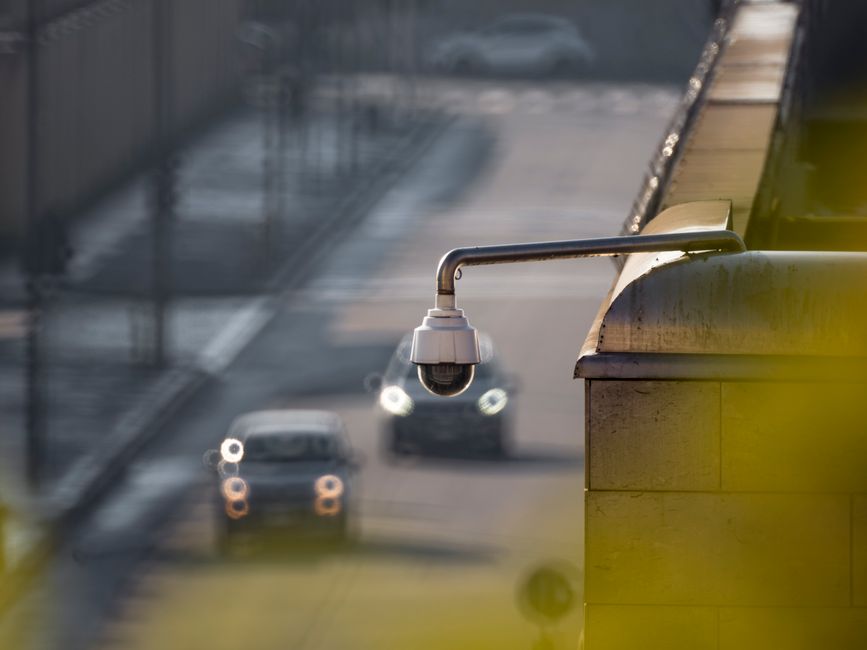
A field test on a connected highway in Spain’s Basque region has uncovered serious shortcomings in how well cars can share sensor data with each other and with roadside equipment at highway speeds. Researchers from Fundación Vicomtech ran the experiment on the Bizkaia Connected Corridor, driving a Toyota Prius equipped with a communication chipset at speeds between 80 and 120 kilometers per hour while roadside units exchanged cooperative perception messages with it. A second vehicle carrying a high-precision tracking system followed along to provide ground-truth position data.
The most striking weakness involved object detection range. The system reliably picked up nearby vehicles only some of the time and degraded sharply with distance: it detected cars within 30 meters just 65.7 percent of the time, fell to 20.5 percent between 30 and 50 meters, and practically vanished at 0.1 percent for objects 50 to 100 meters away. Lead researcher Jon Ander Iñiguez de Gordoa said the inability to sense objects beyond 50 meters was the primary limitation observed during the trials.
Timing problems compounded the issue. The vehicle’s perception stack could take as long as 132 milliseconds to identify objects, and because the perception and transmission systems ran on separate schedules, buffering added up to another 100 milliseconds of worst-case delay. European V2X standards cap transmission at 10 messages per second to prevent network congestion, which further constrains reaction time. Iñiguez de Gordoa estimated that synchronizing detection and transmission could cut end-to-end latency by roughly a third — a meaningful gain when vehicles are covering more than 30 meters every second.
The team’s next focus is data trustworthiness: sensor miscalibration or GNSS failures could feed false information into the collective perception stream. The findings, published in IEEE Transactions on Vehicular Technology, suggest that extending V2X from slow urban streets to high-speed corridors will demand both tighter timing coordination and better long-range sensing.
What do you think?