
Elon Musk's Optimus Timeline Slips as Magnet Curbs and Robotic Hands Slow Progress
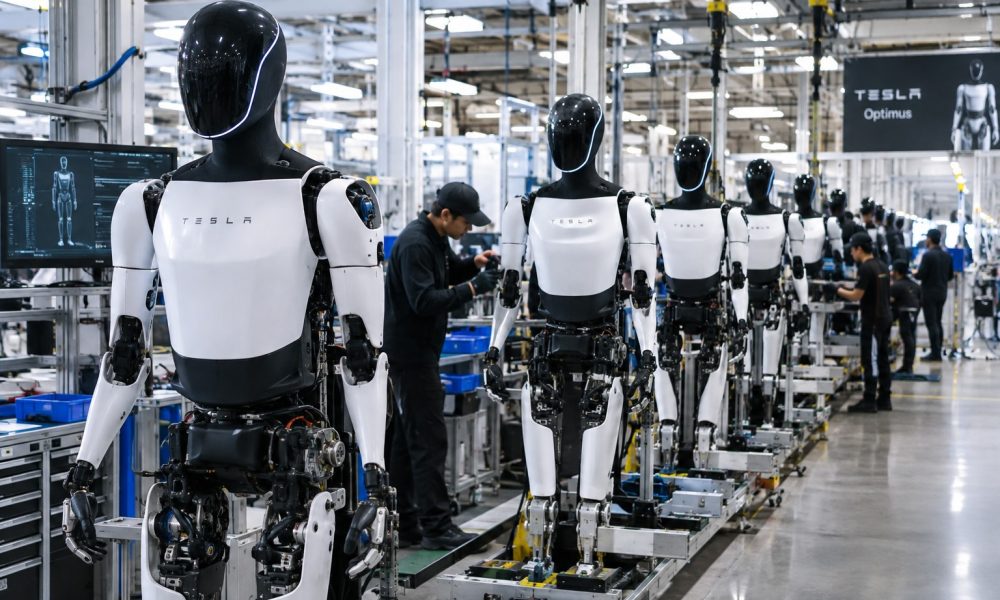
Tesla’s humanoid robot program has run into a pair of stubborn obstacles that are pushing founder Elon Musk’s ambitions further out, according to remarks he made during a live interview at the X Takeover event held at Giga Texas. The conversation, staged in front of roughly 2,000 attendees, touched on why the Optimus project is lagging behind its most optimistic targets.
The first setback is supply-chain related. Musk disclosed that China’s restrictions on exporting magnets used in electric motors threw the Optimus effort off course by roughly two to three months. The shortage was severe enough that, as he put it, the company ended up with robots that had no arms. His proposed remedy is to internalize production: Musk argued that Tesla needs the ability to manufacture every component domestically so that outside trade measures cannot stall the program again. The issue traces back to the compact permanent magnets required in the robot’s arm actuators, where every millimeter of motor size counts.
The second, and by Musk’s own account more fundamental, hurdle is the robot’s hands. A general-purpose humanoid needs fine motor control that he described as shockingly difficult to achieve. He singled out a capability he says nobody has convincingly demonstrated yet: applying precision and force at the same time, such as driving a small self-tapping screw into wood. On top of that, touch sensors must deform elastically while surviving thousands of use cycles without failing, a durability challenge that adds another layer of complexity.
Musk also pushed back on the wave of flashy humanoid robot demonstrations circulating online, calling elaborate ones canned performances rather than genuine intelligence. In his framing, real AI shows itself when a robot encounters something it has never seen before and still manages to handle it, similar to how Tesla’s Full Self-Driving copes with a city it has never navigated.
Looking ahead, Musk cautioned that the Optimus production ramp will be slower than a typical new vehicle launch, largely because there is no established supply chain for robot components the way there is for cars. He has previously described early output as extremely slow. Even so, the company is reportedly working toward an internal goal of more than 1,000 units per week by the end of 2026, while certifying parts suppliers in China and filing new patents covering the hand and arm design. Musk has floated late 2027 as a target for public availability, though Tesla has not formally confirmed that date or published updated production figures, leaving the schedule an open question.
What do you think?