
Dodge's Electric Charger Daytona Sees Sales Collapse, Down Nearly 90 Percent
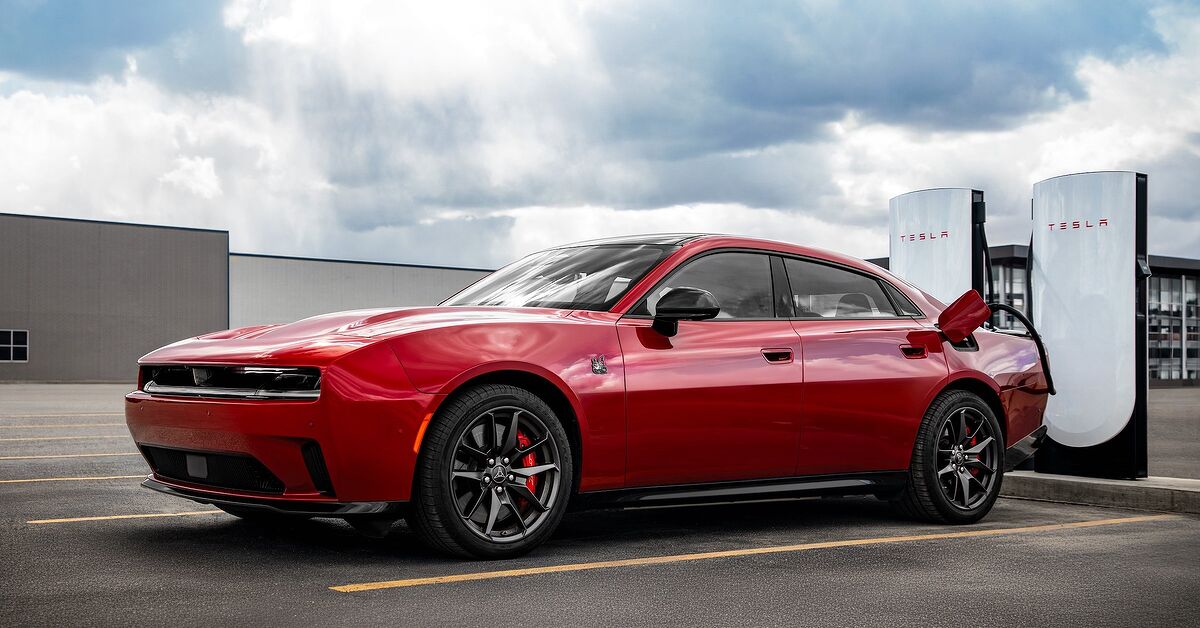
Dodge’s wager on an electric muscle car is not paying off. The Charger Daytona moved only 534 units in the first half of 2026, a roughly 90 percent plunge from the 4,299 examples sold in the same period a year earlier. Across all of 2025, the EV variant mustered just 7,421 deliveries — a figure that now looks like a high-water mark rather than a launch ramp.
The inventory picture is just as grim. Back in the first quarter, the Charger was the slowest-selling vehicle in the United States, with nearly 8,800 units sitting on dealer lots and a market supply measured in the hundreds of days. Average transaction prices settled around $58,300, a modest discount below the base sticker at the time.
Those discounts have since ballooned. Dodge’s incentives page now advertises a 3,500 state EV credit and the total savings can approach $9,000 — on a car that was already carrying four-figure incentives. As dealers scramble to move metal, there is little reason to expect the givebacks to shrink.
Raw performance was never the issue. The Scat Pack delivers 670 horsepower, reaches 60 mph in 3.3 seconds and runs to a 134 mph top speed. What it cannot replicate is the exhaust bark and V8 rumble that gave the Charger its identity, and that appears to be exactly what the nameplate’s traditional buyers want.
Evidence for that sits right next to the EV on showroom floors. The twin-turbocharged, gasoline-fed Charger Six-Pack racked up 1,672 sales in the first quarter and 2,911 in the second, for a combined 4,583 units — close to ten times the electric model’s total over the same span. Its 3.0-liter Hurricane inline-six produces 420 hp, sprints to 60 in 4.7 seconds and tops out at 168 mph. It is slower from a standstill, yet buyers clearly favor an engine they can hear.
Dodge has not pulled the plug on the Daytona. Order books for the 2027 model year are already open even as unsold 2026 examples linger, and a Charger Hellcat with V8 power is reportedly due in early 2028. Whether the badge can be rehabilitated after this stumble remains the open question.
What do you think?