
Checker Marathon: The 1978 Taxi That Refused to Change
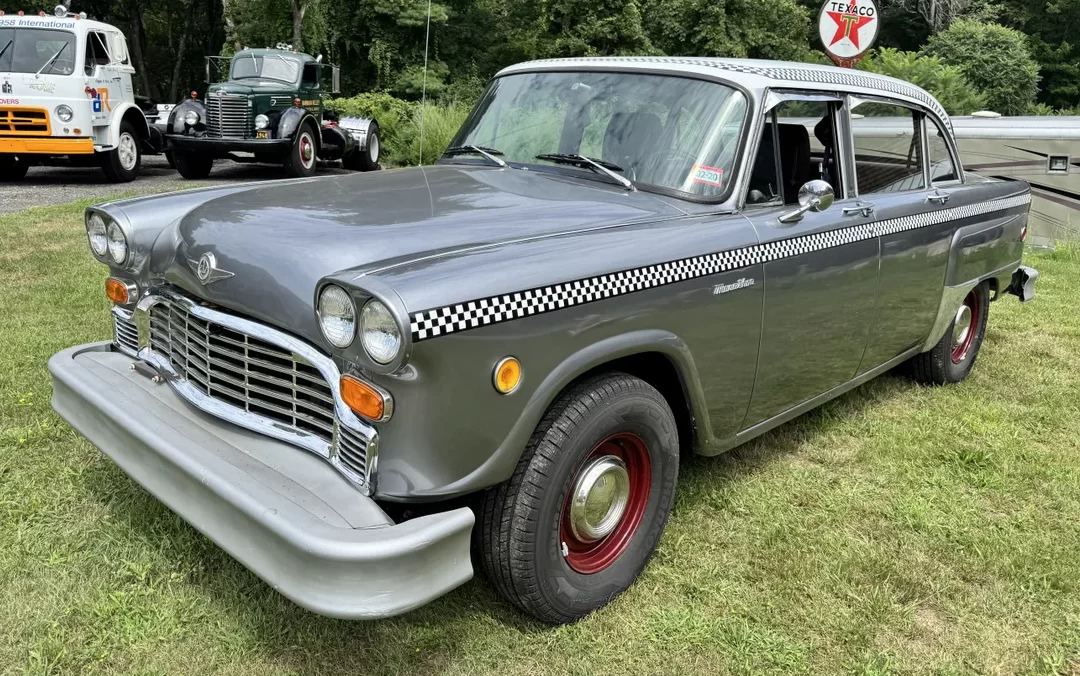
Few vehicles define American taxi culture like the Checker Marathon. For decades its upright, boxy silhouette and cavernous cabin were fixtures on city streets, and this 1978 example carries that unmistakable presence with its grey paint, red wheels and signature checkerboard stripe. The rear-facing jump seats are a reminder of the car’s purpose-built ethos: moving as many passengers as possible took priority over aerodynamics or fashion.
Under the hood sits a 350-cubic-inch small-block V8 sourced from Chevrolet, paired with an automatic transmission. The factory data plate links the engine to Tonawanda production, and a door-jamb tag records an October 1978 build date. It is a straightforward, durable late-Seventies American sedan formula, and arguably one of the reasons these cars stayed in service far longer than most of their contemporaries.
That longevity was no accident. Operators reportedly ran many of these cabs around the clock, and their bolt-on body panels made roadside repairs quick and inexpensive. Parts were harvested from retired cars rather than thrown away, while the massive chrome bumpers absorbed the bumps and scrapes of dense urban traffic. The result was a fleet vehicle that could be patched, repainted and returned to duty almost indefinitely.
This particular Marathon is set to cross the block on October 22 at 10 a.m. Eastern through Hemmings in Hampton Falls, New Hampshire, part of a collection offered by Paul McInnis LLC. With seating for eight, the cabin resembles a small living room on wheels, and the flat rear bench has a reputation for sending unrestrained passengers sliding across it during sharp turns.
Enthusiasts continue to debate where so many of these taxis ended up. Brutal duty cycles and rust claimed many, while others were stripped for spares to keep survivors running. For collectors, that scarcity only adds to the appeal of a machine that values function over style and was, quite literally, built to last.
What do you think?