
Budget E-Bikes in Focus: The Sub-$1,000 Picks Worth a Second Look This October
Shopping for an e-bike under a thousand dollars usually means making peace with compromises — weaker motors, sketchy brakes, batteries that beg to be replaced within a season. That’s exactly why the budget tier deserves more scrutiny than any other slice of the market. Most riders dipping a toe into electric bikes aren’t ready to drop several grand on something they’ve never tried, so the entry price point carries a lot of weight.
After logging thousands of miles across hundreds of test bikes, a handful of models stand out for holding their value rather than just hitting a low number. The current crop, refreshed for October 2026, is a good reminder that cheap doesn’t have to mean disposable.
The $799 Contender That Punches Upward
Probably the most talked-about value play right now is the Lectric XP LITE 2.0, which landed at $799 after a recent update. It’s a folding Class 2 machine with 20-inch wheels, a throttle, and a top speed of 20 mph. The motor is rated 300W continuous with an 819W peak — not a mountain goat, but it scoots along flat ground and gentle grades without complaint.
The detail that separates it from the rest of the sub-$800 field is the 48V electrical architecture. Nearly every rival at this price runs 36V, which translates to noticeably softer acceleration. Lectric also threw in hydraulic disc brakes, and buyers can tack on a Gates carbon belt for $100 or a roughly doubled battery for $200. Fenders cost extra, so budget accordingly. Still, built-in lights, a hidden battery, a color LCD and a sub-50-pound build are hard to argue with at this number.
When $999 Buys Real Speed
Lectric’s own XP4 has effectively replaced the XP 3.0 as the volume leader, and it’s easy to see why. Riders get up to 28 mph, a choice of 500W or 750W hub motors, and either a 48V 10.4Ah pack or a beefier 17.5Ah unit. The long-range version asks $1,299 against $999 for the standard model.
Beyond the motor and battery, the XP4 brings a torque sensor for smoother pedal assistance, an eight-speed drivetrain, hydraulic discs, a sturdier rear rack and a crisp TFT color display. The tire tread leans hybrid — fine for pavement, decent on light trail. For riders who want one bike to cover commuting and weekend errands, this is about as much capability as the sub-$1k bracket allows.
Ride1Up Fires Back
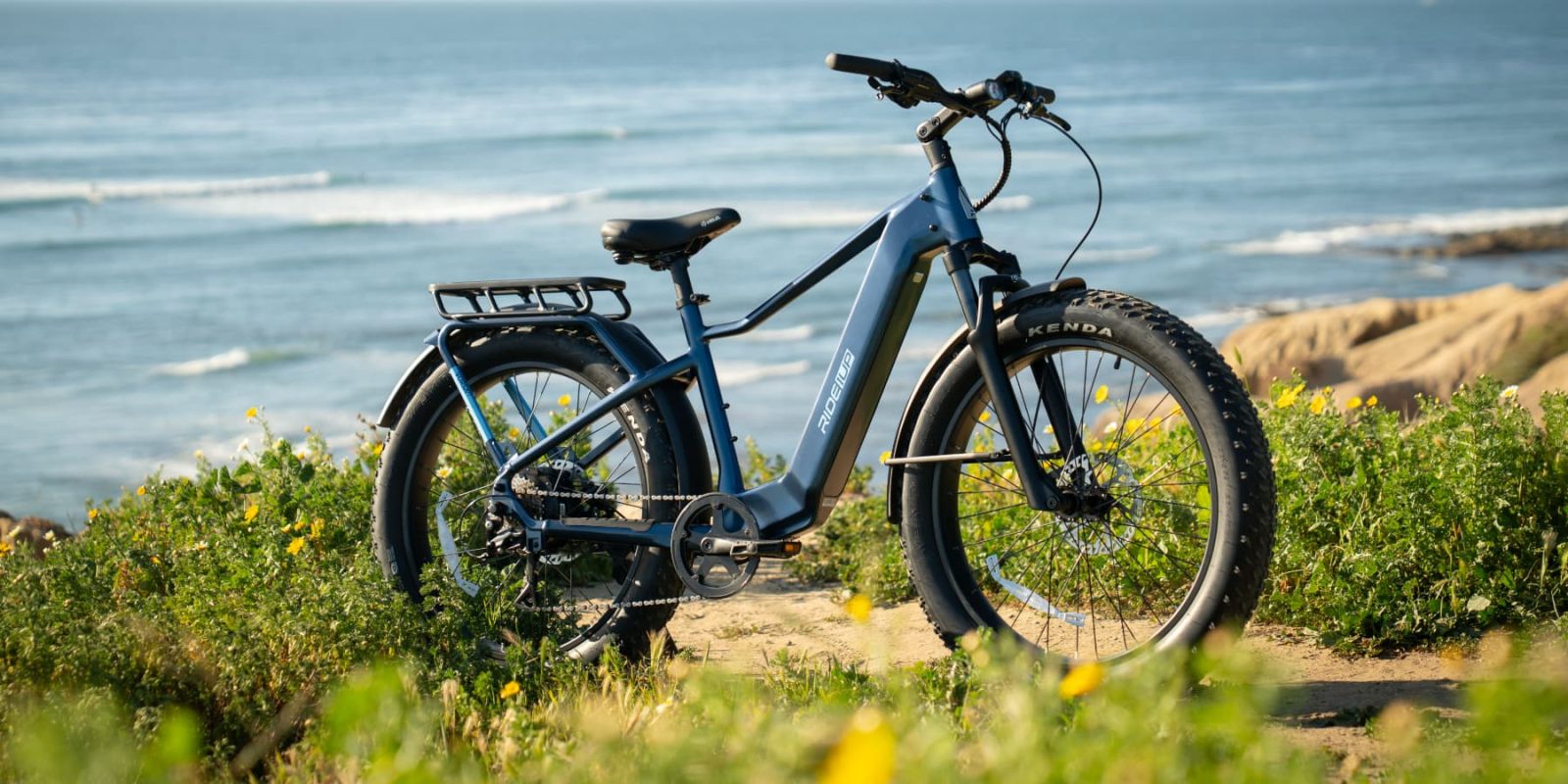
Ride1Up’s answer to the XP line arrives in two flavors: the Portola 02 at $995 and a stripped Portola 02 Lite at $895. Both run a 750W rear hub motor up to 28 mph, with hydraulic brakes, a torque sensor and front suspension on the spec sheet. The full-size model adds a frame-integrated rear rack; the Lite skips it.
Battery choices are a 48V 10Ah or a 48V 15Ah, and the larger pack costs only $100 more — a 50% range bump for a modest upcharge. It’s also one of the better-looking folding fat-tire designs around, which matters more than some riders admit.
The sub-$2,000 tier opens up cargo bikes, cruisers and even e-mopeds. One oddball worth flagging is the $1,249 JackRabbit OG2, which sits somewhere between e-bike and scooter. There are no pedals, but the 20-inch wheels and bicycle saddle make it ride like a tiny folder. Its 300W motor tops out at 20 mph, and the little 158Wh battery manages roughly 10 miles — small enough to carry a spare in a jacket pocket. The payoff is weight: just 25 pounds.
None of these are toys, exactly. But each one asks the same question of a buyer: what do you actually need it to do?
Source: Electrek
What do you think?