
A Ford Store Handed Him Two 2026 Mavericks and His Own Boat — He Drove Away Unable to Pick One
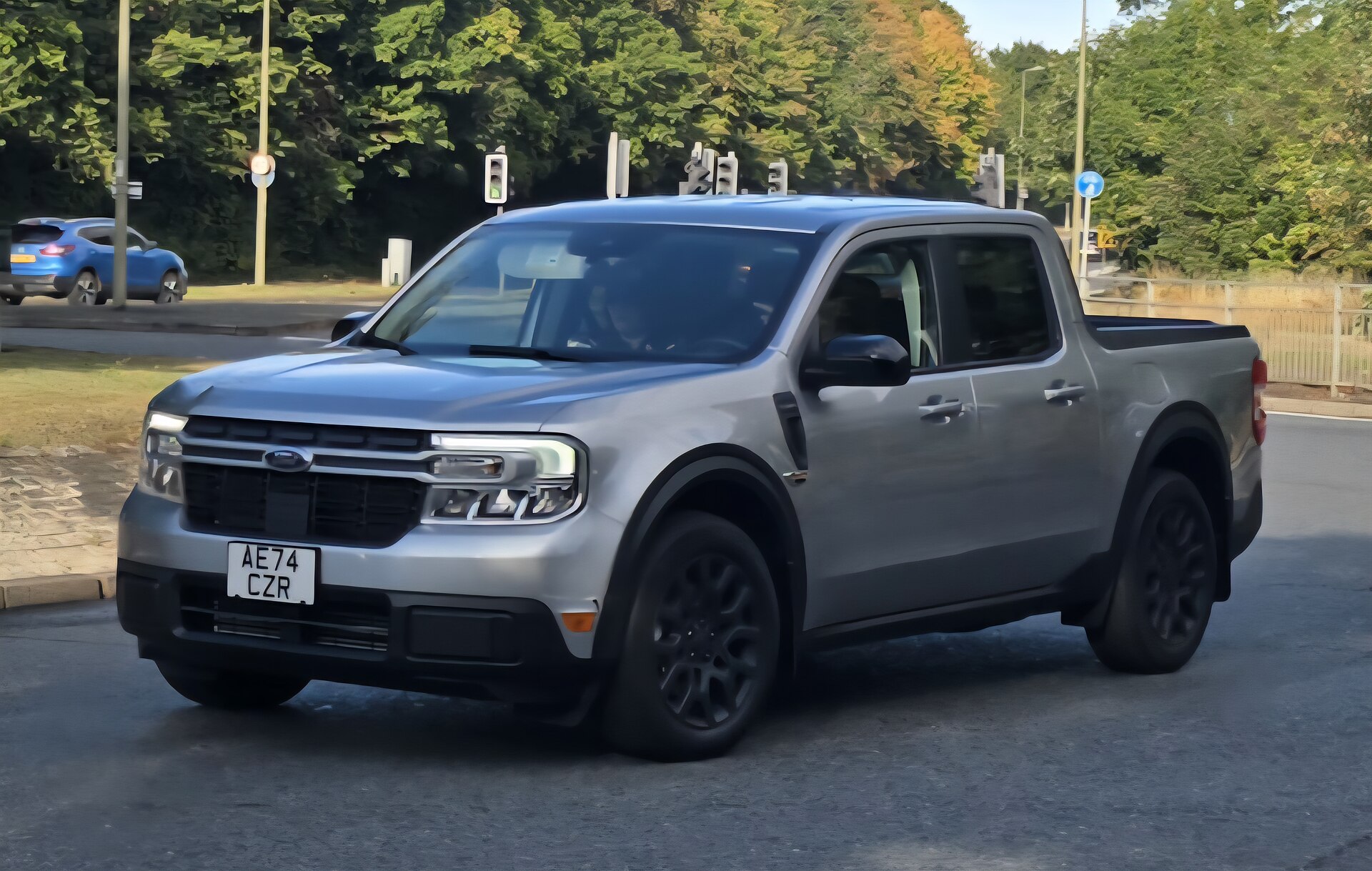
A shopper walked into a Ford dealership with a simple demand: let him hook his own boat to a 2026 Maverick Hybrid and a 2026 Maverick EcoBoost before he signs anything. The store agreed, and the resulting back-to-back run has become one of the more talked-about towing comparisons of the season.
His verdict? He could not feel a difference between the two powertrains.
One Boat, One Route, Twice the Work
The setup was refreshingly unscientific but genuinely repeatable. The buyer lives roughly 15 miles from the lake where he launches several times a year. That route begins on an interstate, transitions onto winding two-lane roads with elevation changes, and ends at a paved, grooved ramp dropping into the water.
Both test trucks were Lariat AWD models fitted with the 4K Tow Package — the exact spec he intended to buy. He hitched his roughly 3,000-pound boat, ran the full loop, then swapped trucks and did it again.
At the ramp, he backed each rig partway down the incline, shifted into Park, and watched. Neither truck slid. Then he backed into the water, paused, and pulled the boat back up. Same result both times.
“I couldn’t tell any difference between the two trucks,” he wrote in a Reddit thread titled 2026 Lariat AWD 4K: hybrid or ecoboost for towing?
The Ratings Explain the Tie
Ford’s 2026 Maverick towing guide makes his seat-of-the-pants finding far less mysterious. Both the 2.5-liter hybrid AWD and the 2.0-liter EcoBoost AWD are published at 4,000 pounds maximum trailer weight when equipped with the 4K package. Strip that package away and the ceiling drops to 2,000 pounds.
Key Specs: 4,000 lb max tow (4K Package) · 400 lb max tongue load · GCWR 8,315 lb hybrid / 8,130 lb EcoBoost · 2.5L hybrid vs 2.0L EcoBoost, both AWD
That 185-pound gap in gross combined weight ratings is not a hidden trailer allowance. GCWR covers the truck, passengers, cargo and the loaded trailer together — both configurations still top out at the same published trailer figure.
Ford also tailors the hardware to each powertrain: the hybrid gets an auxiliary automatic-transmission oil cooler, the EcoBoost gets a radiator upgrade. Both receive a Class III receiver, four- and seven-pin connectors, an uprated cooling fan, a trailer-brake controller, sway control and Tow/Haul mode.
Where the Test Stops Being Useful
The demo answered one question and left several others wide open.
- The 3,000-pound figure may be the boat alone. Boat weights are frequently quoted without trailer, fuel, battery or gear. Whether the full rig sat comfortably under 4,000 pounds — or crept toward it — is unknown.
- Tongue weight is a separate ceiling. At 400 pounds, hitch load also eats into payload along with people, coolers and bed cargo.
- Park on a ramp is not a procedure. Both trucks holding still during a brief pause proves little. Ford’s own guidance advises avoiding grade parking where possible and, when unavoidable, using the service brakes, parking brake and wheel chocks.
- No instruments, no numbers. There were no scale tickets, fuel receipts or timed pulls — just a driver’s impressions across repeated conditions.
And heat tells stories that buttocks do not. A separate Maverick Hybrid owner towing an 1,800-pound utility trailer with a 700-pound ATV aboard watched his temperature gauge climb a single bar over an 884-mile run. He finished the trip, but the gauge flagged something he never would have sensed.
The Maintenance Worry He Took Home
Fuel economy is what pulled him toward the hybrid in the first place — most of his year happens with an empty bed and no trailer behind it. His hesitation was durability: what a decade of occasional launches might do to a power-split hybrid transmission versus the EcoBoost’s eight-speed automatic.
Reddit offered opinions, not evidence. Some commenters said towing drags down a hybrid’s oil-life monitor; others voiced confidence in the hybrid gearbox. Neither is a controlled durability study.
Context matters here. A handful of short lake runs each season is nothing like weeks of mountain-pass towing. A documented 5,000-mile camper haul by another Maverick Hybrid owner returned 16.2 mpg and drained the oil-life indicator to 8 percent — a genuinely punishing trip, and no forecast for this buyer’s routine.
What Would Actually Settle It
A trip to a public scale with the boat loaded would answer more than any ramp test. Compare trailer weight, hitch load and axle figures against the ratings on the window sticker of whichever truck he buys.
He now knows both powertrains can haul his boat out of the water on his ramp, on his road, on a single afternoon. Whether they age the same way under years of that work — that question is still parked in the driveway.
Photo: Calreyn88 · Wikimedia Commons (CC BY-SA 4.0)
Source: Torque News
What do you think?