
A 2025 Forester, 16,000 Miles, and a $177 Service the Dealer Can't Prove You Need
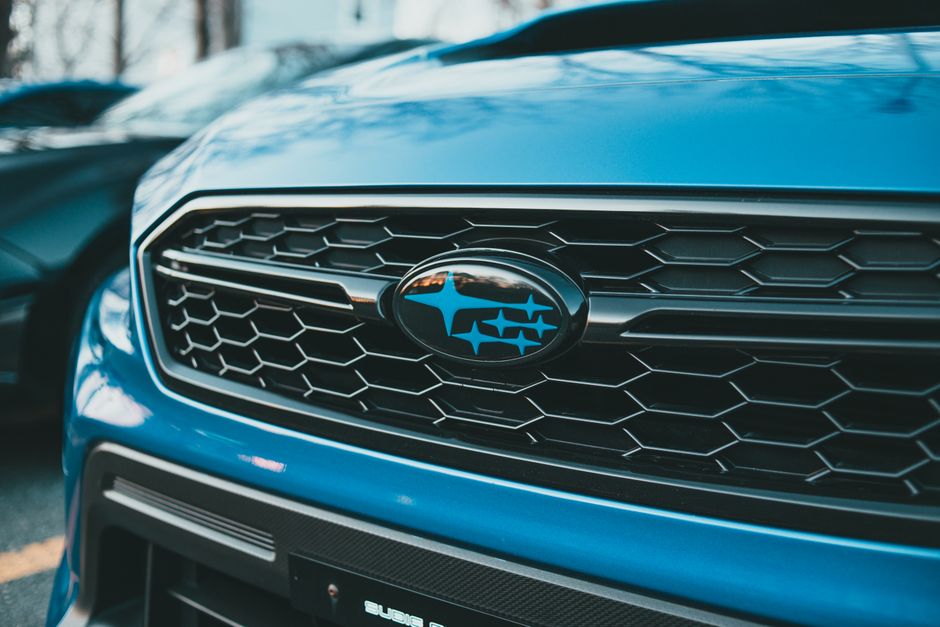
A Subaru service department tried to sell a 2025 Forester owner a $177 carbon cleaning at just 16,000 miles. Then, according to the owner, the manager conceded the shop has no way of knowing whether the car actually needs it.
That admission is the whole story. If a technician can’t measure a problem, the upsell is a guess dressed up as maintenance — and the customer is the one paying for it.
The owner, posting as cathyd on The Subaru Forums, had brought the Forester in for its third oil change. The service writer floated a “carbon blaster” treatment. When cathyd noted the car mostly does 20-to-30-minute drives each way, the response was that this driving pattern should be fine — and the pitch continued anyway.
A quote of $177 followed, along with a vague warning that ignoring the carbon now would mean a pricier repair later. No figure was given for that hypothetical bill. The same visit also produced a tire recommendation, on rubber that cathyd says is already wearing at 16,000 miles.
What Subaru’s Own Paperwork Says
Subaru’s service bulletin 02-193-24R (revised May 13, 2026) does describe a walnut blasting procedure — but it is framed as a fix for specific symptoms: misfire codes, black smoke, loss of power, knocking and rough idling. It covers 2019–2024 Forester models with the 2.5-liter engine, not the 2025.
The job itself is not a quick squirt of chemicals. It involves pulling the battery and intake manifold, blasting the intake valves and ports of each cylinder, cleaning the throttle body and adding a P.E.A. carbon cleaner to the fuel tank. Subaru’s warranty labor allowance for the naturally aspirated engine is 3.0 hours.
Do the arithmetic against shop rates north of $100 an hour and a $177 ticket doesn’t buy a real walnut blast. So the obvious question is what, exactly, is being sold.
The Bulletin’s Symptom List: Misfire codes · black exhaust smoke · lack of power · engine knocking · rough idle — plus fuel quality and driving habits as contributing factors.
The direct-injection angle explains why this topic keeps surfacing. On the Forester’s 2.5 boxer, fuel is sprayed straight into the cylinder rather than across the intake valves, so gasoline never washes those valves the way it does on a port-injection engine.
Owners Aren’t Buying It
Reaction in the thread ranged from skeptical to blunt. One member wrote that if a 16,000-mile 2025 genuinely needed the service, the right move would be to trade the car in. Another reported never having the work done at all — and being at 196,000 miles. A third called the pitch absurd even for a 2006 model.
- Cost reality check: Several owners pegged a genuine walnut blast at a couple of hours of labor, roughly 30 minutes per cylinder, plus intake removal and refitting.
- Cheaper alternatives: Top Tier fuel or a bottle of Techron or Red Line, which some owners prefer to a dealer treatment.
- Who pays for what: A dealer service drive earns revenue from selling work, one member argued, making an independent Subaru specialist worth considering.
One member suspected the shop simply pours in a can of fuel additive and charges triple digits. Nobody in the thread confirmed what the $177 package actually included — and that uncertainty is the point.
Worth noting: Subaru’s own procedure finishes with a bottle of P.E.A. cleaner in the tank. If a $12 additive is the last step of a $177 job, buyers deserve to know which part they’re paying for.
Questions Worth Asking at the Counter
If a carbon cleaning lands on your service estimate, a few plain questions cut through most of the fog:
- What is it, precisely? A chemical spray, a tank additive, or walnut blasting with the manifold off?
- What was measured? If the shop says there’s no way to tell whether it’s needed, ask why it’s being recommended.
- Does the manual call for it? No Subaru bulletin ties walnut blasting to a fixed mileage interval.
- Get the price in writing and price it against an independent specialist.
- Under powertrain warranty with symptoms? Ask whether bulletin 02-193-24R applies before reaching for a card.
The Forester in question had no reported symptoms at all — no check engine light, no rough idle, no stumbling. That alone makes the recommendation hard to justify.
For owners tracking their own cars, a drop in fuel economy is a reasonable trigger to investigate. Check it by hand at the pump rather than trusting the dashboard. And after any dealer visit, a two-minute walk around the tires costs nothing.
The thread doesn’t name the dealership, and the store hasn’t had a chance to respond. Still, the pattern is familiar enough that Forester owners should recognize it when it appears on their own invoice.
Source: Torque News
What do you think?