
A 1969 Checker Marathon With a Frame-Off Restoration Heads to Market
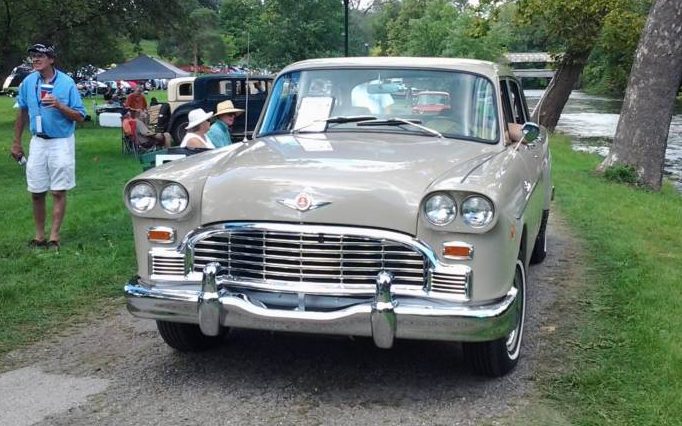
Few American cars carry as much everyday history as the Checker Marathon, and a freshly restored 1969 example has now surfaced for sale in Michigan, listed on craigslist with an asking price of $25,000. It sits in Port Huron, roughly 200 miles from Kalamazoo, the city where the car was originally built — a fitting detail for a machine whose whole identity was tied to a single factory town.
Checker’s story began with Morris Markin, a Russian immigrant who arrived in Chicago in 1913. He built a fortune supplying uniforms to the military during World War I and then put that money into local automakers, among them Commonwealth Motors, which built cabs for the Checker Taxi service company. Markin went on to acquire cab drivers’ licenses, a move that fed a notoriously violent rivalry in the taxi trade. After his home was firebombed, he relocated the operation to Kalamazoo, Michigan, redesigned the taxi and began selling to fleets across the country. The cars earned a reputation for toughness, and in 1959 Checker pushed into the retail passenger market with the Superba — essentially a cab minus the taxi livery. The Marathon followed in 1960 and retained styling that had barely shifted since the previous decade. Even this 1969 car looks nearly indistinguishable from its ten-year-older siblings apart from small details.
Checker built its vehicles from unusually stout stuff: a frame that resisted flex and heavy-gauge sheet metal. Output was tiny by Detroit standards — a strong year meant about 8,000 units. Powertrains changed over time, starting with Buda and Lycoming engines, moving to Continental, and finally, from 1965, Chevrolet inline-sixes and V8s. This particular car has undergone a nut-and-bolt, frame-off restoration, and under the hood sits a 327-cubic-inch V8 paired with an automatic transmission.
The cabin reflects Checker’s philosophy of deliberate austerity. Front and rear bench seats, plain vinyl upholstery and a restricted color palette all helped hold costs down, while occupants sit high with excellent outward visibility and generous rear-seat space. This example adds power steering and power brakes. The formula worked commercially: by staying locked into its niche and resisting frills and yearly changes, Checker kept fleet managers happy, since parts could be swapped between cars almost regardless of model year.
Standing over 62 inches tall and weighing close to 4,000 pounds, the Marathon eventually became a hard sell. Its dated styling and thirsty fuel consumption clashed with a market shifting toward new fashions and repeated fuel crises. Checker stopped building new cars in 1982, though it remanufactured cabs until 1997. The company later produced parts for General Motors before filing for bankruptcy in 2009. The factory site was eventually absorbed by a packaging plant, but the old test track is still there, unused, waiting for tires.
What do you think?