
A 1964 Chevrolet Corvette Emerges After Four Decades in Storage
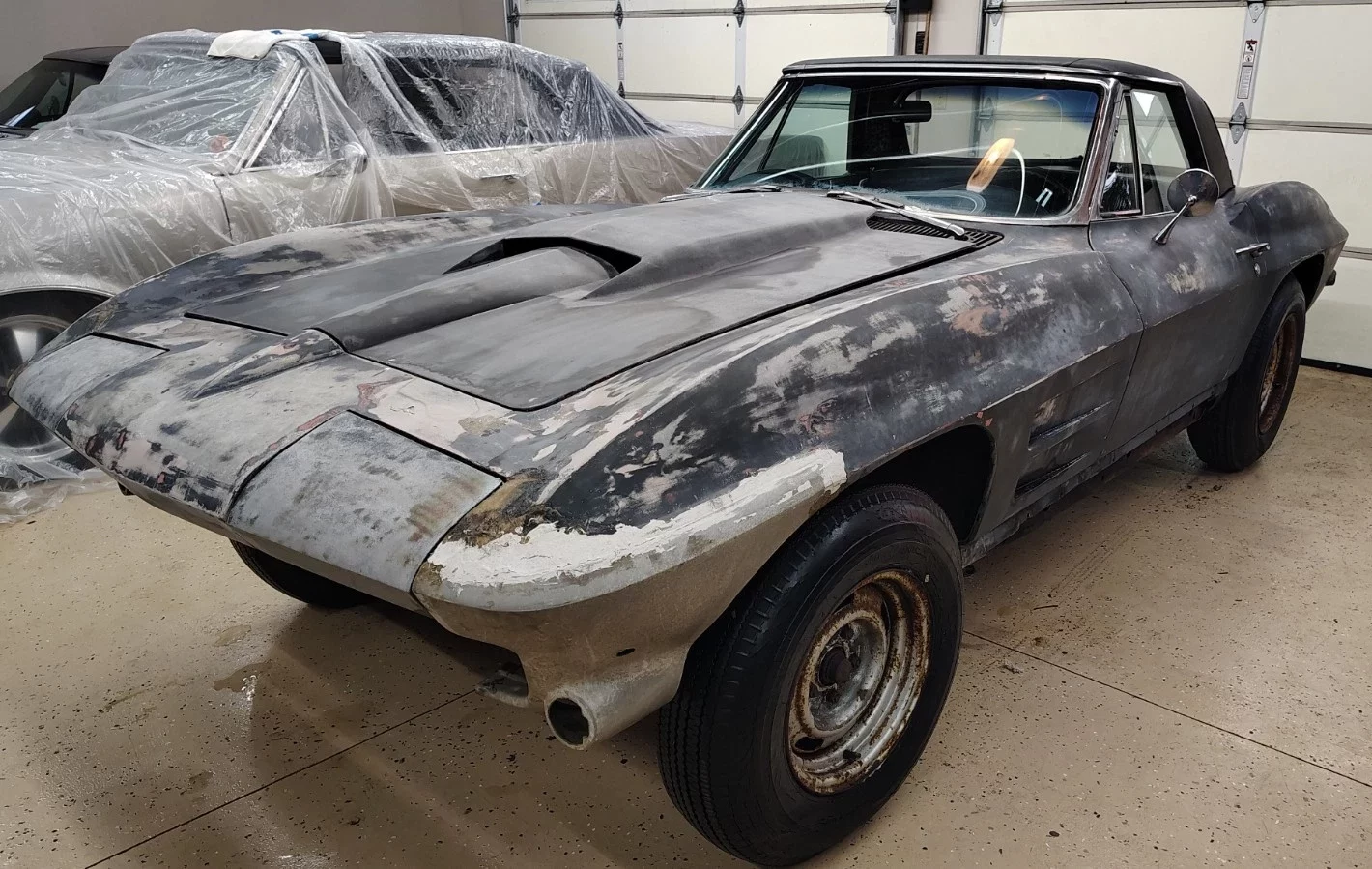
A 1964 Chevrolet Corvette convertible has come out of a long slumber, reportedly sitting untouched in a barn for roughly forty years. The car is now listed for sale out of Huntingdon, Pennsylvania, and it is being offered as a project rather than a turnkey classic. That framing matters: this is a C2-generation Sting Ray that will demand serious time and effort before it ever rolls under its own power again.
The mechanical situation is the first thing a serious buyer needs to weigh. The original 300-horsepower engine and the factory four-speed manual transmission are both gone, and no numbers-matching drivetrain accompanies the car. The seller notes the car was originally built with that 300 hp setup and a four-speed, but what remains is a shell awaiting a new heart. There is also a practical caution flagged in the listing: the VIN shown in the photos has its final digits obscured, so confirming the complete VIN before any money changes hands would be a sensible first step.
On the plus side, the body is described as being in reasonable condition, needing only minor work before paint. Much of the interior survives, including the 1964 seats, a complete instrument cluster and the glove box door. The radio, however, is missing — a relatively easy item to source or replace with an updated unit. Two items complicate the picture: the convertible top is entirely absent, while a vinyl-covered hardtop from a 1967 car comes with the sale. The frame shows rust, though no sections have rusted completely through, meaning repairs are possible without necessarily hunting down a replacement frame. The front and rear body clips, along with the headlight buckets, are said to be original.
Context helps here. C2 Corvettes, built between 1963 and 1967, remain among the most coveted American sports cars, and clean examples of this era routinely trade in the $41,000 to $55,000 range. That spread is what makes a rough project potentially interesting — the math only works if an owner supplies a large amount of their own labor and accepts that the missing drivetrain will shape both cost and final value. For a buyer who wants a finished car with matching numbers, this is not the right starting point. For someone chasing a hands-on restoration and willing to source parts over time, a solid body and an intact interior are meaningful building blocks.
The car is available through an online auction listing. Prospective buyers in distant locations are reminded that a pre-purchase inspection is always wise before committing funds, particularly on a vehicle with an obscured VIN, no original engine or transmission, and a frame that needs attention. Done properly, this could eventually become a striking open-top C2 — but it will be a long road to get there.
What do you think?